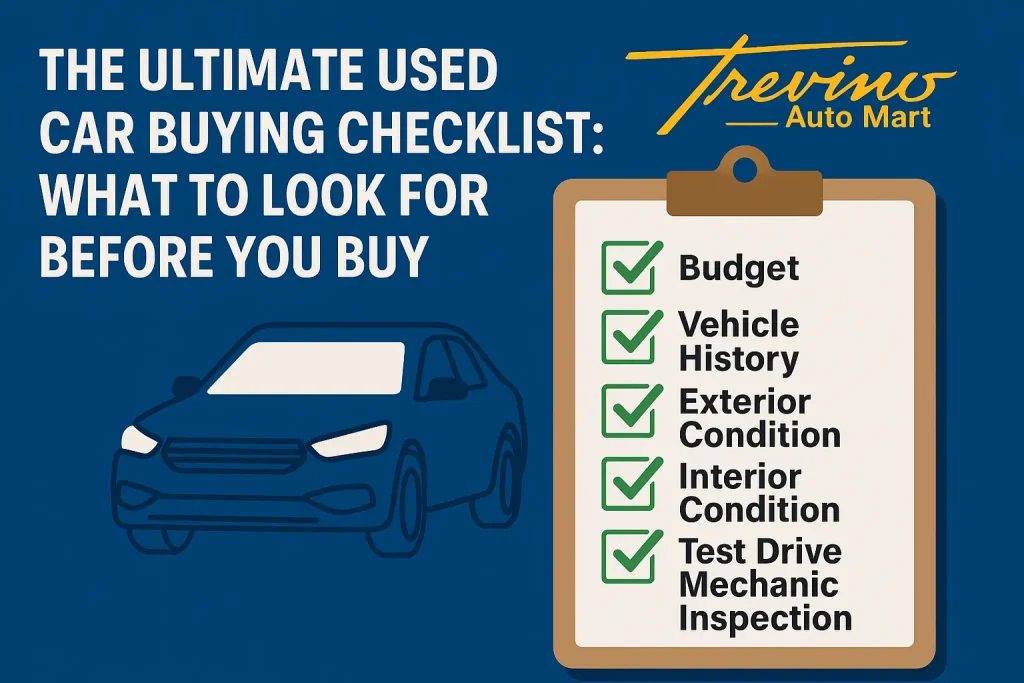
Buying a used car is one of the smartest financial decisions you can make. It allows you to bypass the steep depreciation curve of a brand-new vehicle while still securing a reliable, modern ride. However, the secondary market can be a minefield of hidden mechanical issues, odometer fraud, and title scams. To protect your hard-earned money, you need a systematic approach.
Using a comprehensive used car buying checklist before you pay is the single best way to slow down, remove emotion from the transaction, and ensure you are making a rock-solid investment.
In this ultimate 2026 guide, we break down every critical inspection point, test drive strategy, and paperwork check you must perform before handing over your money.
Why You Need a Checklist Before Signing the Dotted Line
The used car market has evolved rapidly. Today’s vehicles are essentially computers on wheels, packed with advanced driver-assistance systems (ADAS), hybrid powertrains, and complex digital infotainment screens. While these features make driving safer and more enjoyable, they are also incredibly expensive to repair if they fail.
If you buy a car with a failing transmission, a masked engine issue, or a compromised battery pack, you could easily face repair bills that exceed the vehicle’s market value.
By following a structured used car buying checklist before you pay, you shift the power dynamic back to you. It gives you the leverage to negotiate a fairer price or walk away from a bad deal entirely.
Phase 1: Pre-Inspection & Digital History Check
Before you even travel to see the vehicle in person, you should perform some initial digital detective work. This saves you valuable time and helps weed out obvious lemons.
1. Run a Comprehensive VIN History Report
Never buy a used car without reviewing its vehicle history report via services like Carfax, AutoCheck, or VinAudit.
Check for salvage or rebuilt titles: A branded title drastically reduces the car’s resale value and can make it difficult or impossible to insure.
Look at the service history: Regular oil changes, brake replacements, and scheduled maintenance are signs of a responsible previous owner.
Verify the mileage trends: Ensure the odometer readings progress logically over time to rule out rollback fraud.
2. Research Common Model Year Issues
Every car model has its weak points. Spend 15 minutes on owner forums or consumer reliability databases to see if the specific year, make, and model you are looking at is prone to premature engine failure, transmission slip, or electrical gremlins.
Phase 2: The Exterior Walk-Around
Once you are standing in front of the car, it is time to begin your physical inspection. Make sure the car is parked on a flat surface and that you are inspecting it in broad daylight. Never inspect a car in the rain or after dark, as water droplets and shadows easily hide paint defects and dents.
1. Panel Alignment and Paint Consistency
Analyze the gaps between body panels (such as the hood, doors, and trunk). They should be uniform. Uneven gaps are a major red flag indicating the car was in an accident and poorly repaired.
Look at the paint under direct sunlight. Check for overspray on rubber seals or slight variations in color tone between panels, which indicates aftermarket paintwork.
2. Rust and Corrosion Check
Inspect the rocker panels, wheel wells, and the bottom of the doors for rust.
Look underneath the car with a flashlight to inspect the frame or unibody. Heavy structural rust can compromise the safety of the vehicle and will fail safety inspections.
3. Tire Condition and Alignment Clues
Check the tread depth using the penny test or a tread depth gauge.
Look closely for uneven tire wear. If the inside edge of a tire is significantly more worn than the outside, the car likely has a bad wheel alignment or suspension issues.
Verify the tire manufacture date code (a four-digit code on the sidewall). Tires older than six years should be replaced, regardless of tread depth.
Phase 3: The Interior and Electronics Inspection
Modern car cabins are packed with expensive electronics. Replacing a malfunctioning touchscreen or an air conditioning compressor can easily cost thousands of dollars.
1. Check Every Button and Screen
Turn the ignition key to the “On” position without starting the engine. Verify that all dashboard warning lights (Engine, Airbag, ABS) illuminate briefly. If a light doesn’t turn on, a shady seller may have pulled the bulb or fuse to hide a major fault.
Start the car and test the infotainment system, backup camera, Bluetooth connectivity, and GPS.
Test the climate control system. Ensure the air conditioner blows ice-cold within 60 seconds and the heater blows hot.
2. Cabin Wear and Tear vs. Odometer
Inspect the driver’s seat bolster, steering wheel leather, and rubber pedal pads.
If the odometer reads only 30,000 miles but the steering wheel is heavily worn and the driver’s seat is torn, the odometer may have been tampered with.
Phase 4: Under the Hood & Mechanical Check
You don’t need to be a certified master mechanic to spot obvious warning signs under the hood.
1. Inspect the Fluids
Engine Oil: Pull the dipstick. The oil should be amber or dark brown. If it looks like a milky chocolate milkshake, coolant is leaking into the oil, indicating a blown head gasket.
Transmission Fluid: If accessible, check the transmission dipstick. The fluid should be pinkish-red. If it is dark black and smells burnt, the transmission is likely slipping and damaged.
Coolant: Look at the coolant overflow reservoir. It should be bright green, orange, or blue. Rust-colored water or floating debris indicates a neglected cooling system.
2. Look for Active Leaks
Shine a flashlight around the engine block. Look for wet, dark spots which indicate active oil, power steering, or coolant leaks.
Look on the ground directly beneath the engine bay for fresh puddles.
3. Check Belts and Hoses
Squeeze the radiator hoses (only when the engine is cold!). They should be firm but pliable. Brittle, cracked, or excessively mushy hoses need immediate replacement.
Inspect the serpentine belt for dry rot, fraying, or missing ribs.
Phase 5: The 20-Minute Test Drive Playbook
The test drive is your best opportunity to evaluate how the car performs in real-world conditions. Do not let the seller distract you with conversation or by turning on the radio. Keep the cabin quiet so you can listen to the car.
1. Cold Start Performance
Always insist that the engine is cold when you arrive. A warm engine can mask starting issues, belt squeals, or piston slap.
Listen for any knocking, ticking, or screeching sounds when the engine fires up.
2. Steering and Braking Dynamics
Find a safe, flat road, loosen your grip slightly on the steering wheel, and see if the car pulls to one side.
Apply the brakes firmly from 40 mph. The car should stop in a straight line without any pulsation in the pedal or shaking in the steering wheel (which indicates warped brake rotors).
3. Transmission Smoothness
Pay close attention to how the transmission shifts.
For automatics, shifts should be smooth and seamless. Any hesitation, hard clunking, or “rev-hanging” during gear changes is a sign of a failing gearbox.
For manuals, check for gear grinding and ensure the clutch bites firmly without slipping under hard acceleration.
Phase 6: The Professional Pre-Purchase Inspection (PPI)
Even if you complete this entire checklist perfectly, there are things you simply cannot see without putting the car on a hydraulic lift or using an advanced OBD-II diagnostic scanner.
Never skip a Pre-Purchase Inspection (PPI).
Take the car to an independent, third-party mechanic of your choice. A standard PPI costs between $150 and $250. This is a tiny price to pay to avoid buying a multi-thousand-dollar mistake. The mechanic will check:
Hidden diagnostic trouble codes (DTCs) stored in the car’s computer.
Suspension bushing wear, ball joints, and tie rods.
Brake pad and rotor thickness.
Frame integrity and hidden structural damage from past accidents.
If the seller refuses to let you take the car to a mechanic for a PPI, walk away immediately. This is the single biggest red flag in the used car industry.
Phase 7: Paperwork, Title Check, and Payment Safety
Once the physical and mechanical inspections are complete, you must verify the legal status of the vehicle before handing over any money.
1. Title Verification
Ensure the seller’s name matches the name printed on the physical title. Ask to see their driver’s license to verify their identity.
Check for liens on the title. If a bank or finance company holds a lien on the vehicle, the seller does not legally own the car outright, and they cannot transfer the title to you until that loan is paid off.
2. Match the VINs
Verify that the 17-digit Vehicle Identification Number (VIN) on the dashboard matches the VIN on the driver’s side door jamb, the physical title, and the registration paperwork. If they do not match, walk away.
3. Secure Payment Methods
Avoid paying in cash if possible, especially when buying from a private party.
Use a secure payment method like a cashier’s check or perform the transaction inside a bank branch.
- Always get a signed Bill of Sale that clearly outlines the purchase price, odometer reading, date, and signatures of both parties.
Summary Checklist: Quick Reference Guide
Keep this quick-reference summary handy during your next used car viewing:
| Inspection Area | Key Checkpoints | Status (Pass/Fail) |
| :— | :— | :— |
| Vehicle History | VIN check, title status, service records, odometer consistency | [ ] |
| Exterior | Paint matching, panel gaps, tire tread, rust check | [ ] |
| Interior | Warning lights, AC/Heater, infotainment, window switches | [ ] |
| Under the Hood | Oil quality, coolant color, active fluid leaks, belt condition | [ ] |
| Test Drive | Cold start, transmission shifts, braking stability, suspension noise | [ ] |
| Professional PPI | Independent mechanic lift inspection, OBD-II scanner check | [ ] |
| Paperwork | Seller ID matches title, no active liens, matching VINs | [ ] |
Conclusion
Buying a used car doesn’t have to be a stressful gamble. By arming yourself with this comprehensive used car buying checklist before you pay, you protect yourself against dishonest sellers, hidden mechanical failures, and administrative nightmares.
Take your time during the inspection, ask tough questions, insist on a professional pre-purchase inspection, and never let a seller rush you into a transaction. If a deal feels too good to be true, or if the seller refuses to let you properly inspect the vehicle, trust your gut and walk away. There will always be another car.