The automotive landscape has shifted dramatically. If you are currently asking, "hybrid vs electric car, which is better?" you aren't alone. In 2026, the decision is no longer about which technology is technically superior, but which powertrain actually fits your daily rhythm and budget. With the landscape of federal incentives completely transformed, making the wrong choice could cost you thousands of dollars over the next five years.
The New Financial Reality: 2026 Tax Credit Updates
Before you step onto a dealership lot, you must understand the post-IRA-credit landscape. As of September 30, 2025, the $7,500 federal Clean Vehicle Credit (Section 30D) and the $4,000 used EV credit (Section 25E) have expired. This changes the cost-to-own comparison significantly.
Instead, the government has introduced the OBBBA auto loan interest deduction. This allows for a deduction of up to $10,000 per year on loan interest, but there is a critical catch: it applies exclusively to new, U.S.-assembled vehicles. This policy creates a massive financial advantage for specific manufacturers like Tesla, Ford, and GM, effectively pushing buyers toward these brands regardless of whether they choose an EV or a qualifying plug-in hybrid.
Understanding the Three Core Powertrains
To determine which vehicle is "better," we must define the three distinct categories of electrified transportation available in 2026.
1. The Pure Electric Vehicle (BEV)
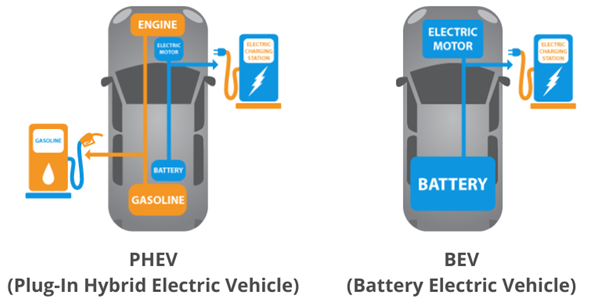
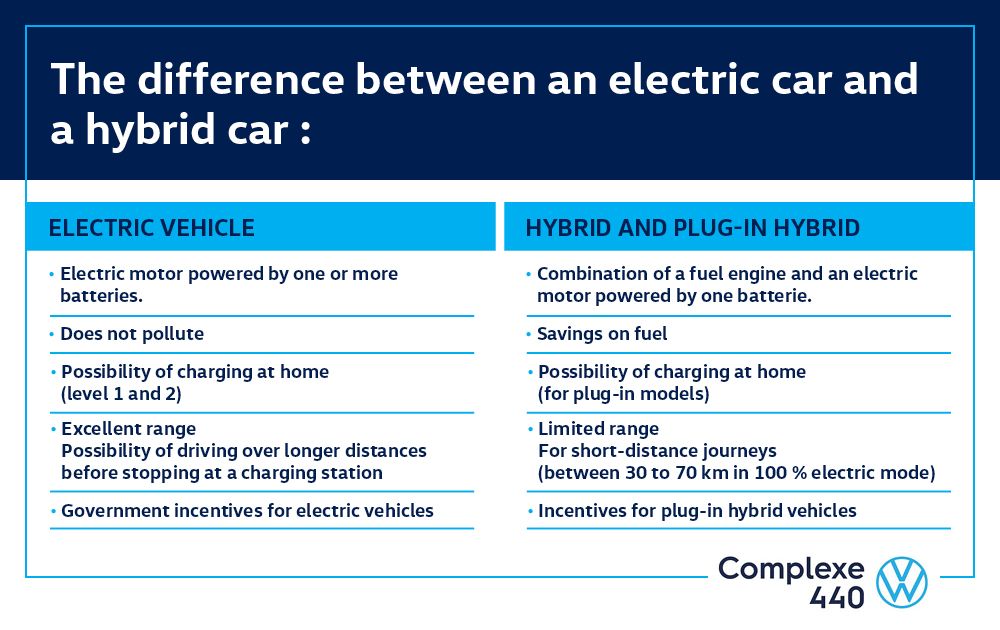
A Battery Electric Vehicle (BEV) operates entirely on battery power, utilizing a large battery pack (typically 40–130 kWh) to drive electric motors. There is no internal combustion engine (ICE) on board. In 2026, manufacturers have bifurcated battery chemistry:
- LFP (Lithium Iron Phosphate): Used in entry-level models for exceptional cycle life and durability.
- NMC (Nickel Manganese Cobalt): Reserved for premium models requiring high energy density and maximum range.
2. The Hybrid Electric Vehicle (HEV)
Often called a "self-charging hybrid," the HEV is primarily a gas-powered vehicle that uses a small 1–2 kWh battery to provide electrical assist. You never plug this vehicle in; it relies on regenerative braking and engine power to recharge itself. It is the perfect bridge for those who want better fuel economy without changing their refueling habits.
3. The Plug-in Hybrid (PHEV)
The PHEV is the "best of both worlds" for many drivers. It features a larger 8–22 kWh battery that allows for 20–50 miles of electric-only driving. Once the battery is depleted, the car switches to its gas engine, acting like a standard hybrid. You can choose to charge it daily for maximum efficiency or ignore the plug and use it as a standard gas-powered vehicle.
Why Per-Mile Fuel Cost is Your Biggest Leverage Point
The ultimate goal of switching to an electrified vehicle is usually to slash your monthly fuel expenses. In 2026, the disparity in costs is striking.
- EVs (BEVs): You can expect a per-mile cost of roughly $0.03–$0.05/mi. This is the absolute lowest operating cost for a personal vehicle.
- Hybrids (HEVs): Because they rely on gasoline with electric assist, your per-mile costs typically hover around $0.06–$0.08/mi.
- Plug-in Hybrids (PHEVs): If you are diligent about charging, you can achieve $0.03–$0.07/mi. However, this fluctuates wildly depending on whether you actually plug the vehicle in.
If your daily commute is under 40 miles and you have access to home charging, a BEV is almost mathematically guaranteed to be the cheaper option over a five-year ownership cycle.
Charging Access: The "Deal-Breaker" Factor
Do not ignore your living situation when comparing these vehicles. Home charger access is the single greatest predictor of ownership satisfaction.
- If you have a home charger: An EV is the superior choice. You wake up every morning with a "full tank," eliminating the time spent at gas stations entirely.
- If you have no charging access: Do not buy an EV yet. Charging a BEV exclusively via public infrastructure is more expensive and time-consuming. In this scenario, a full hybrid (HEV) is the better choice because it requires no behavior change.
Maintenance: The Simplicity of Electrification
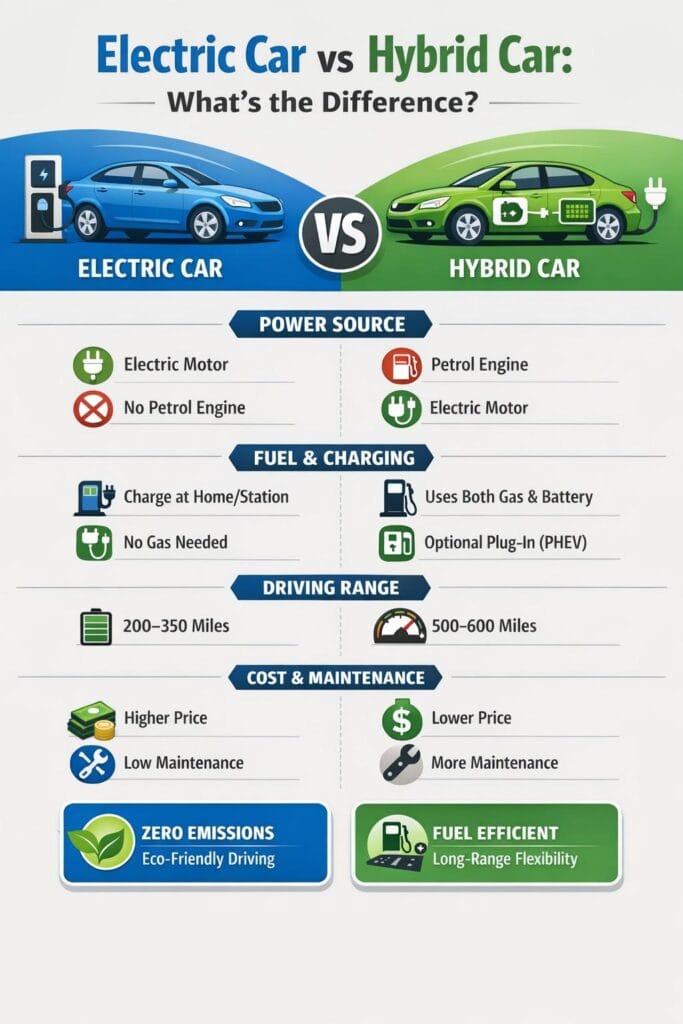
One of the most compelling arguments for moving toward an EV or a PHEV is the reduction in complex mechanical parts. An internal combustion engine contains hundreds of moving parts—valves, pistons, fuel injectors, transmissions, and exhaust systems—that eventually wear out.
An EV, by contrast, has a significantly simpler drivetrain. By relying on electric motors, you eliminate the need for oil changes, spark plug replacements, and complex exhaust repairs. This isn't just about saving money at the shop; it’s about preventative maintenance peace of mind. While hybrids are more efficient than standard gas cars, they still carry the full mechanical burden of an engine, meaning your maintenance requirements remain roughly similar to traditional vehicles.
The 2026 Market Shift: Why Hybrids are Still Relevant
You might think that EVs have rendered hybrids obsolete, but the 2026 market says otherwise. The 2026 Toyota Camry is now 100% hybrid across all trims, starting at $29,100, achieving an impressive 51 MPG. For the average consumer who isn't ready to invest in high-voltage infrastructure, these hybrids provide a level of accessibility and reliability that the current EV market often struggles to match.
For drivers who frequently travel long distances in rural areas where charging stations are sparse, the hybrid offers the "security" of the gas pump. You get the benefits of electrical assistance—quieter operation, better low-speed torque, and reduced emissions—without the anxiety of range limitations.
Analyzing Environmental Impact: Beyond the Tailpipe
When you dig into the environmental impact of your next vehicle, it is essential to look at the life cycle of the product. While it is common to focus solely on tailpipe emissions, the carbon footprint of your vehicle starts the moment the raw materials are extracted for the battery and the chassis.
- The Battery Burden: Both EVs and PHEVs rely on large lithium-ion packs. The mining processes for lithium, cobalt, and nickel are resource-intensive. However, Source 6 suggests that because EVs eliminate combustion entirely, they overcome this "manufacturing debt" through zero-emission operation much faster than vehicles that continue to burn fossil fuels for the duration of their lifespan.
- The Hybrid Compromise: A full hybrid (HEV) has a much smaller battery, which means lower initial manufacturing emissions. Yet, because an HEV must continue burning gasoline for every mile driven, its total lifecycle emissions are typically higher than a battery-electric vehicle charged on a moderately clean energy grid.
- Grid Dependency: Your environmental footprint as an EV driver is directly tied to your local utility company. If your home is powered by renewables—such as solar or wind—your per-mile carbon output drops near zero. If your local grid is heavily reliant on coal, the "green" advantage of an EV is slightly diminished, though still typically superior to an equivalent gas-powered engine.
Decoding the Range Anxiety Myth in 2026
"Range anxiety" was once the primary barrier to electric vehicle adoption, but in 2026, the technology has reached a tipping point that makes this concern largely outdated for the average driver.
- The 800V Revolution: Modern EV architectures, such as those found in the Hyundai Ioniq 6 or the Kia EV6, now feature 800V systems. This allows for ultra-fast charging, capable of taking your battery from 10% to 80% in as little as 18 minutes at a DC fast-charging station.
- Psychological Shift: Most drivers rarely travel more than 300 miles in a single day. With most new EVs offering 300–450 miles of range, the average user will only find themselves needing to charge on the road during occasional long-distance road trips.
- The PHEV Middle Ground: If you find yourself paralyzed by the idea of waiting at a charger, the Plug-in Hybrid (PHEV) offers a psychological safety net. You can drive to work on pure electricity, run errands on a charge, and when the battery drains, the engine seamlessly engages to carry you hundreds of miles further, effectively neutralizing the anxiety of being "stranded."
Resale Value: The Invisible Cost of Ownership
The purchase price is only one part of the equation. Depreciation is the largest cost of vehicle ownership, and in the current market, the resale value of electrified vehicles is a complex landscape that requires careful navigation.
- EV Value Volatility: EVs often face steeper depreciation curves than traditional internal combustion vehicles due to the rapid advancement of battery technology. As manufacturers release new models with longer ranges and faster charging, older EVs can see their market desirability drop.
- Hybrid Stability: Because hybrids are viewed as a "safe" transition technology, models like the Toyota Prius or the hybrid variants of the CR-V tend to hold their value exceptionally well. Buyers who are still hesitant about full electrification often seek out these proven hybrids on the used market.
- The OBBBA Effect: Since the OBBBA auto loan interest deduction favors U.S.-assembled vehicles, high-demand models from Tesla and Ford are seeing more consistent resale floors. If you purchase a vehicle that qualifies for this financial incentive, the "effective cost" of your ownership is lowered, which can help insulate you against harsh depreciation at the time of resale.
Performance and the "Electric Instant-Torque" Experience
One aspect of vehicle choice that rarely gets discussed until the test drive is the sheer driving dynamics of an electric motor. There is a fundamental difference in how power is delivered, and for many, this is the factor that seals the deal.
- Instant Torque: Electric motors deliver 100% of their torque the moment you step on the pedal. This creates a responsive, agile driving experience that makes a standard gasoline-powered car—even a luxury performance one—feel sluggish and disconnected.
- Center of Gravity: Because the battery pack is typically located in the floor of an EV, these vehicles have an exceptionally low center of gravity. This leads to improved handling, less body roll in corners, and a more planted feeling on the highway.
- Refinement and Silence: The lack of a vibrating, reciprocating engine means that the interior of an EV is significantly quieter at low and high speeds. You aren't just buying a car; you are buying a more serene commuting experience that reduces fatigue during heavy traffic.
Insurance and Ownership Logistics
When upgrading your vehicle, don't forget to account for the insurance premiums and the necessary home infrastructure upgrades. These are the "hidden" costs that turn a budget-friendly sticker price into a more expensive reality.
- Insurance Premiums: Currently, EVs often command higher insurance rates than comparable hybrids or ICE vehicles. This is partly due to the higher cost of battery repairs and the limited number of certified repair shops equipped to handle high-voltage systems.
- The Charging Installation: If you choose a BEV or a PHEV, you will likely want a Level 2 home charger. While you can survive on a standard 120V wall outlet, it will be agonizingly slow. Investing in a professional installation for a 240V charger adds between $500 and $2,000 to your upfront costs, but it is an investment that pays for itself in convenience and reduced public charging reliance.
- Tire Wear: Be mindful that high-torque EVs are significantly heavier than their hybrid counterparts due to their large battery packs. This increased weight can lead to faster tire wear, meaning you may find yourself replacing your tires every 20,000 to 30,000 miles, compared to the longer lifespans seen on lighter, engine-driven vehicles.
Regional Infrastructure: Why Geography Dictates Your Choice
Your location is the most important "hidden" constraint in this decision. Your zip code essentially dictates your powertrain.
- The Urban Corridor: If you live in a dense metropolitan area, you are the ideal candidate for a BEV. You likely have access to a network of public fast chargers, and your daily driving is usually limited to short, stop-and-go trips where regenerative braking can maximize your efficiency.
- The Rural Frontier: If your lifestyle involves long commutes through rural terrain, high-speed highway driving, and limited access to local grid infrastructure, the Hybrid (HEV) remains the most practical solution. Attempting to force an EV into a rural setting without robust planning can lead to frustrating logistical bottlenecks.
- The Suburban Middle-Ground: For those living in suburbs with driveways or garages, the PHEV is the gold standard. It allows you to leverage the electricity grid for the vast majority of your errands while providing the "range confidence" needed for weekend trips to see family or outdoor activities.
Safety and Technology Integration
Modern vehicles have become rolling computers, and the level of Advanced Driver Assistance Systems (ADAS) is often tied to the powertrain. Manufacturers frequently prioritize their most advanced safety tech in their flagship electric platforms.
- Over-the-Air (OTA) Updates: Most modern EVs utilize advanced OTA software, meaning your car can literally get "smarter" and more efficient while parked in your driveway. While some gas and hybrid models have started adopting this, the deep integration of software in EVs often results in better functionality, improved battery management, and, occasionally, increased range via software optimization.
- Weight as a Safety Feature: The structural integrity of modern EVs is engineered to handle massive battery weight, leading to very high scores in rollover tests and side-impact protection. However, the increased mass also means that your car has more kinetic energy in a collision.
- Regenerative Braking and Driver Fatigue: One-pedal driving, a common feature in many EVs, changes the way you interact with the road. By allowing the car to slow down simply by lifting off the accelerator, it reduces the need for the brake pedal in stop-and-go traffic. This is a game-changer for long-term health and driver comfort in congested urban areas.
The Financial Strategy: Calculating Your "Break-Even" Point
To decide which is better, you should perform a simple Total Cost of Ownership (TCO) calculation. Do not be distracted by the sticker price alone. Instead, look at the five-year picture.
- Calculate Annual Mileage: Multiply your daily commute by the number of workdays, then add your estimated weekend and road-trip mileage.
- Estimate Fuel vs. Electricity Costs: Use your local utility rate (cost per kWh) and compare it against the regional price of gasoline. Even with the fluctuation of energy markets, electricity is generally a fraction of the cost of gas.
- Factor in Maintenance: Subtract the costs of annual oil changes, transmission flushes, and engine-related repairs that you will avoid with a BEV.
- Subtract Interest Deduction: Remember to factor in the potential $10,000/year loan interest deduction for U.S.-assembled vehicles. If you are financing your car, choosing a qualifying vehicle can effectively drop your interest rate, which is a massive competitive advantage for domestic EV and PHEV manufacturers.
- Determine the Delta: If your fuel and maintenance savings exceed the higher monthly payment of an EV compared to an HEV within a 36-month window, the EV is the clear financial winner.
Understanding Battery Longevity and Degradation
One of the most persistent concerns for potential buyers is the fear of battery death. You have likely heard horror stories about massive replacement costs, but the reality for the 2026 consumer is far more optimistic.
- Battery Warranty Standards: Nearly all manufacturers now offer an 8-year/100,000-mile warranty on the battery pack specifically. This covers you for the period of the loan and beyond.
- The LFP Advantage: Many entry-level EVs are now moving toward Lithium Iron Phosphate (LFP) batteries. Unlike older chemistries, these are incredibly resilient and can be charged to 100% capacity daily without the same level of degradation seen in older NMC batteries.
- Second-Life Potential: As EVs age, their battery health is monitored by sophisticated Battery Management Systems (BMS). If you are looking at buying a used EV, most dealerships can now provide a "State of Health" report, giving you full transparency into how the battery has performed over its life. This transparency is rapidly closing the trust gap between buyers and the secondary EV market.
The Psychological Benefit of "Zero-Maintenance" Days
There is an intangible value to ownership that is often overlooked in spreadsheets: the time you reclaim by not visiting a gas station or a service bay.
- The "Full Tank" Every Morning: If you are a homeowner with an EV charger, your day starts at 100%. The time spent waiting for pumps, handling oily gas nozzles, and paying at the register vanishes. Over a decade of ownership, this saves hundreds of hours of your life.
- Reliability: Mechanical systems in traditional cars, even the most reliable ones, are subject to thermal stress and mechanical wear. The solid-state, simplified nature of an electric motor means that your vehicle is effectively ready to go every time you turn it on, with a significantly lower risk of a "stranded" event due to an engine failure.
- Noise and Vibration Reduction: The stress of a noisy, vibrating cabin is subtle but cumulative. Moving to an electric powertrain transforms your vehicle into a sanctuary. When you combine this with the reduced maintenance schedule, you aren't just buying a different way to fuel your car; you are buying a more refined, less stressful lifestyle.
Selecting Your Path: The Final Decision Framework
If you are still weighing the two options, use this decision matrix to align your specific needs with the current market reality.
-
Scenario A: The "City Commuter"
- Usage: Daily drive is under 50 miles, mostly in urban traffic.
- Infrastructure: Access to home charging or a dedicated outlet at work.
- Goal: Minimal fuel cost and maximum tech integration.
- Decision: Battery Electric Vehicle (BEV). The math favors you heavily, and your driving patterns maximize the strengths of the technology.
-
Scenario B: The "Suburban Explorer"
- Usage: Frequent short trips for groceries/school runs, but occasional weekend adventures.
- Infrastructure: Home charging available.
- Goal: Versatility and emissions reduction without compromising on long-distance road trip capability.
- Decision: Plug-in Hybrid (PHEV). You can do 90% of your driving on electricity, but you keep the gas engine for those "just in case" moments, providing peace of mind without needing to plan your route around chargers.
-
Scenario C: The "High-Mileage Traditionalist"
- Usage: 150+ miles per day for work or rural living.
- Infrastructure: No home charging and infrequent access to fast chargers.
- Goal: Reliability and fuel efficiency without changing your current refueling behavior.
- Decision: Full Hybrid (HEV). You benefit from the modern efficiency of a gas-electric powertrain without having to deal with the logistical constraints of external charging.
The Future of the Hybrid: A Bridge or a Destination?
Some critics argue that hybrids are a "dying breed," destined to be replaced by full EVs. However, in 2026, the hybrid has proven to be incredibly resilient. As the power grid continues to evolve and infrastructure catches up to consumer demand, the hybrid is playing a vital role in decarbonization.
- Electrifying the Fleet: By forcing 100% of a model’s lineup to be hybrid, as Toyota has done with the Camry, manufacturers are making massive gains in carbon reduction across the entire vehicle population. Every car that is "partially electric" is a step in the right direction.
- The Role of Regulation: While the federal government has ended purchase subsidies, future emissions regulations will continue to push for higher MPG and lower tailpipe outputs. Hybrids are the most immediate way for manufacturers to meet these standards without relying on the massive infrastructure changes required for full EV adoption.
- Consumer Choice: Ultimately, the hybrid represents the "freedom of choice." It bridges the gap for the millions of drivers who live in apartment buildings, rural areas, or areas with extreme weather that can temporarily limit EV range. It is not a consolation prize; it is a mature, efficient, and highly reliable technology that serves a massive segment of the global population.
Preparing for the Dealer Visit: What to Ask
When you finally decide which path you are taking, don't walk into the dealership unprepared. Your knowledge is your strongest negotiating tool.
- "Does this vehicle qualify for the OBBBA interest deduction?" Ensure you know the status of your specific model in regards to the new, U.S.-assembled-only deduction. This can save you significantly more than a traditional rebate.
- "What is the battery health status?" If you are buying a used PHEV or BEV, insist on seeing the battery degradation report. You would check the engine health of a used gas car; don't skip this for a battery-powered one.
- "What are the charging requirements for this model?" Even for a PHEV, knowing whether it supports Level 2 charging is vital for your home setup.
- "How does the powertrain perform in cold weather?" Every driver should know that range drops in the winter. Ask for the "cold weather impact" data to ensure you aren't blindsided when the temperature drops.
The shift toward electrification is the single biggest change in the automotive industry in over a century. By understanding the nuance between BEV, PHEV, and HEV, you are positioning yourself to make a decision that isn't just about "which is better" in a vacuum, but which is better for your specific life. Whether it’s the efficiency of the EV, the versatility of the PHEV, or the reliability of the HEV, the right choice is waiting for you at the dealership.
Navigating the Used Market: Risks and Rewards
Buying an electrified vehicle on the secondary market requires a different level of vigilance than purchasing a traditional gasoline car. While the mechanical simplicity of an EV or hybrid is a major advantage, the battery health is the heartbeat of your investment.
- Request a Battery Report: Never purchase a used BEV or PHEV without a diagnostic report showing the "State of Health" (SoH). A battery with 85% capacity might be perfect for a city commuter, but it represents a significant difference in value compared to one at 95%.
- The Age Factor: Battery technology has leaped forward in the last three years. Vehicles manufactured before 2023 may utilize older cooling architectures or chemical compositions that are more prone to degradation than the latest 2026 models.
- Warranty Transferability: Before closing the deal, verify if the remaining battery warranty is transferable to a second owner. This is often the difference between a "safe bet" and a financial liability.
Beyond the Commute: The Recreational Capability
If your lifestyle involves towing, camping, or heavy outdoor use, you must look beyond the basic fuel economy figures. Electric and hybrid vehicles are changing the way we approach recreation.
- V2L (Vehicle-to-Load) Power: Many modern EVs and high-end PHEVs offer power outlets (120V) that allow you to plug in tools, coffee makers, or camping gear directly into the car. This effectively turns your vehicle into a giant portable battery.
- Instantaneous AWD: Most dual-motor electric vehicles feature electric all-wheel drive, which provides a level of traction control and stability on dirt or snow that traditional mechanical differentials simply cannot match in speed.
- The Towing Trade-off: While electric motors provide massive torque for towing, they also consume energy at a significantly higher rate under load. If you frequently tow a boat or trailer, a PHEV or a high-range BEV is necessary to avoid being anchored to a charger mid-trip.
The Final Verdict: Making Your Move
The "better" vehicle is the one that removes friction from your life. If you have the means to install home charging and value the serenity of a near-silent cabin, the Battery Electric Vehicle is an unparalleled upgrade that redefines the driving experience. If your life is defined by spontaneity and long-distance travel, the Plug-in Hybrid acts as a brilliant, versatile companion. For the high-mileage driver looking for pure reliability, the Full Hybrid remains a masterclass in modern engineering.
Don't wait for the perfect moment; identify your daily rhythm today and claim the vehicle that aligns with it. Your future self will thank you for the thousands of dollars saved and the hours reclaimed from the gas pump. The road ahead is electric—take the wheel.
References
-
Kbb — Which Is Better to Buy: A Fully Electric Car or Hybrid?, 2026
-
Caranddriver — Electric vs. Hybrid Cars: Pros and Cons of Each – Car and Driver, 2026
-
Autotrader — Should You Buy an Electric Car or a Plug-in Hybrid?, 2026
-
Driveauthority — EV vs Hybrid vs Plug-in Hybrid: What’s the Difference?, 2026
-
Cinch — Hybrid or electric car: which is better? – cinch, 2026
-
Sustainablebusinessmagazine — Hybrid Cars vs Electric Cars: Choosing Between Hybrid and Electric Cars …, 2026
-
Theaa — Hybrid vs electric cars: which one is best for me? – The AA, 2026
-
Thetopcarlist — Hybrid vs Electric Cars: How to Choose Between Them, 2026