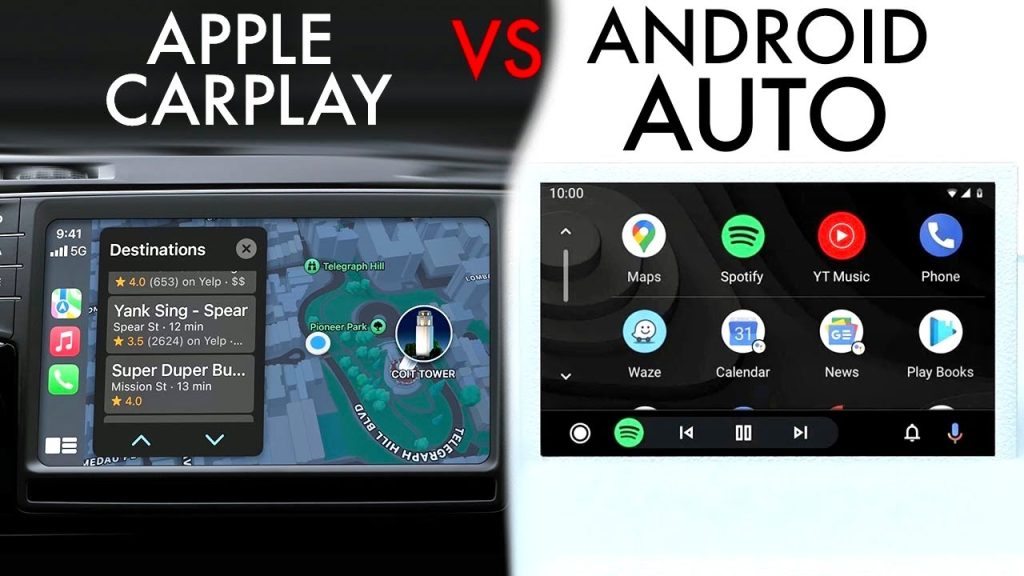
For years, our cars were simply tools to get us from point A to point B. Today, they are extensions of our digital lives. When you step into your vehicle, you expect your digital ecosystem—your music, your messages, your navigation—to transition seamlessly onto your dashboard. This expectation of deep smartphone integration has turned your car’s infotainment system into a major selling point.
If you are shopping for a new vehicle or looking to upgrade your current ride with an aftermarket head unit, you have likely asked yourself: Apple CarPlay vs Android Auto: Which Is Better?
Both platforms have evolved dramatically. What started as simple phone-mirroring software has transformed into highly sophisticated, AI-driven copilots. In this comprehensive guide, we will break down the key differences, features, pros, and cons of Apple CarPlay and Android Auto in 2026 to help you answer the question: Apple CarPlay vs Android Auto: Which Is Better?
The Core Differences: System Integration and Compatibility
Before diving into the user interface and features, it is crucial to understand the fundamental difference between these two giants in the ongoing debate of Apple CarPlay vs Android Auto: Which Is Better?
Apple CarPlay is designed exclusively for iPhones. It requires an iPhone 5 or newer to function.
Android Auto is built solely for Android devices. It typically requires a phone running Android 8.0 (Oreo) or higher.
Neither system is cross-compatible. You cannot run CarPlay with a Samsung Galaxy, nor can you run Android Auto with an iPhone. Therefore, your choice in the Apple CarPlay vs Android Auto: Which Is Better? debate is largely dictated by the smartphone in your pocket.
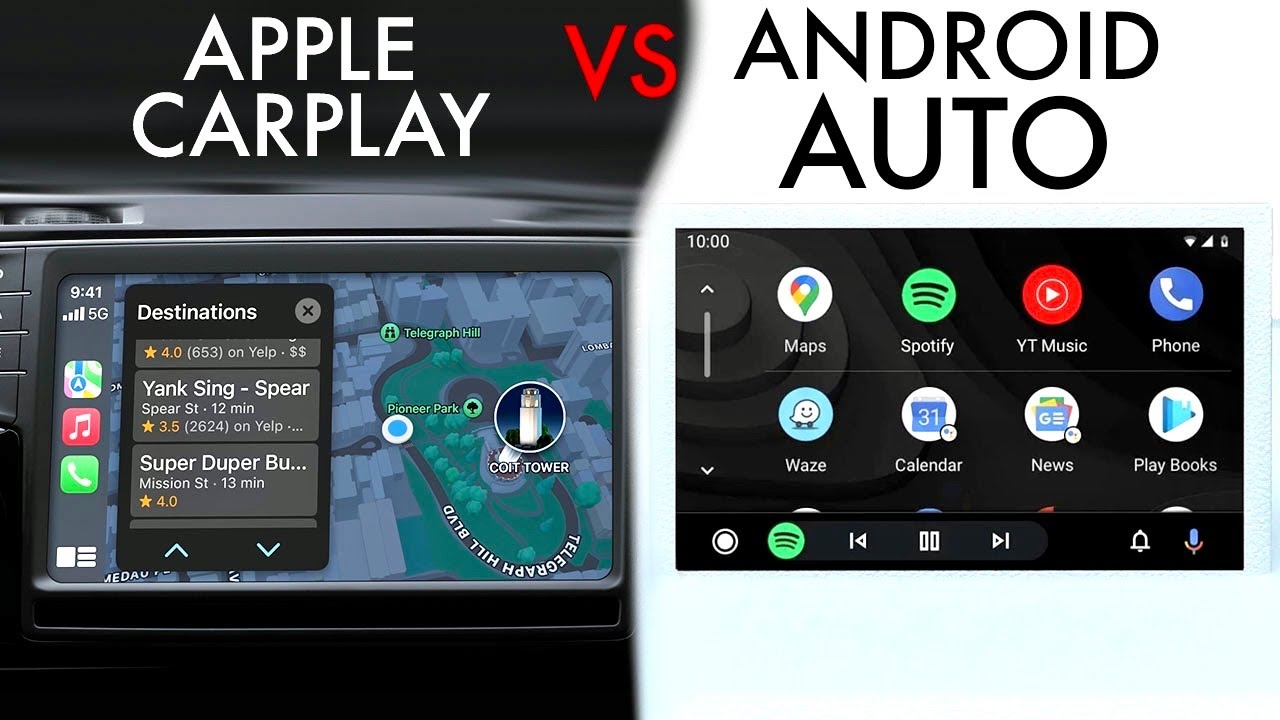
However, if you are platform-agnostic or planning to switch phones, understanding how these systems operate under the hood, and how they benefit from continuous software updates, is vital for making an informed decision about Apple CarPlay vs Android Auto: Which Is Better? In 2026, wireless connectivity has become the industry standard. While older vehicles still require a USB cable, nearly all modern cars support wireless Apple CarPlay and wireless Android Auto, utilizing a combination of Bluetooth and 5GHz Wi-Fi for low-latency performance.
User Interface and Experience (UI/UX)
The way information is presented on your dashboard directly impacts your driving safety and convenience, with both platforms integrating crucial driving safety features, a key factor when considering Apple CarPlay vs Android Auto: Which Is Better? Both platforms have taken distinct paths toward optimizing the driver’s user interface.
Apple CarPlay’s Sleek and Consistent Layout
Apple has always prioritized simplicity, and CarPlay is no exception. Its user interface is incredibly clean, intuitive, and highly reminiscent of an iPad or iPhone.
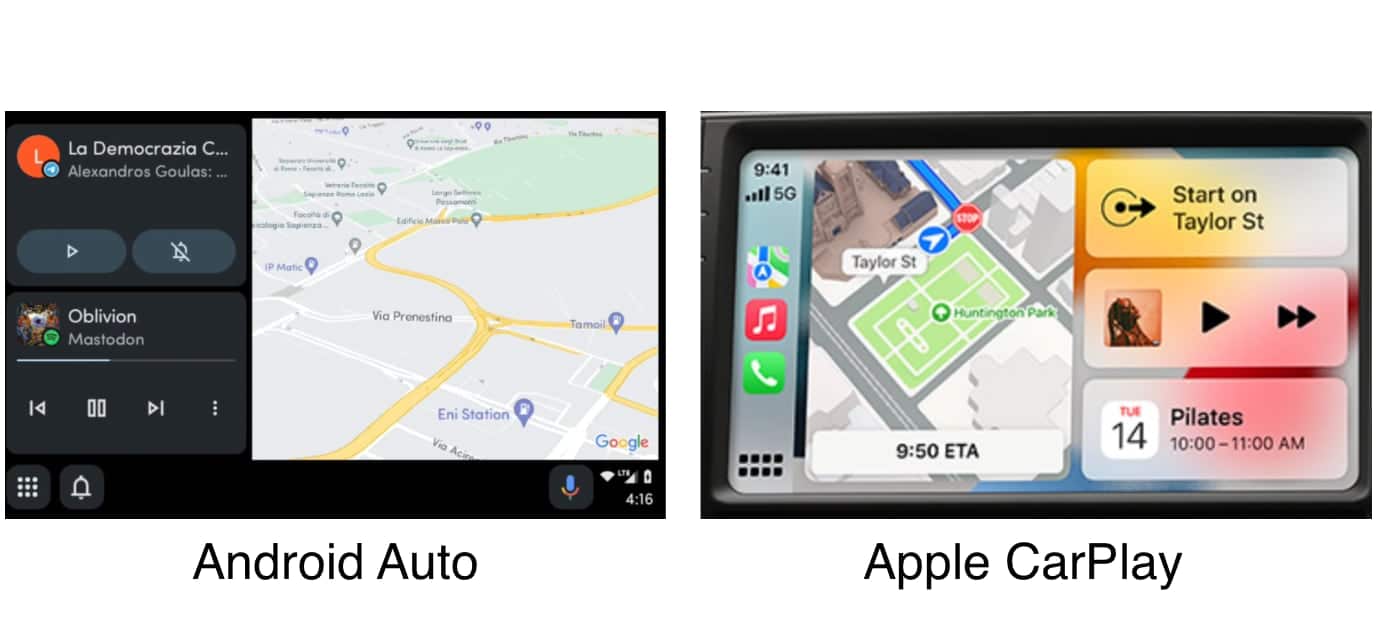
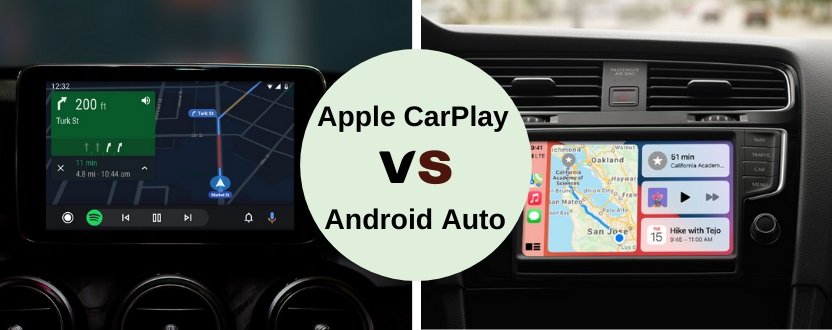
CarPlay uses a grid of rounded, square icons on your touchscreen display that are easy to tap while driving. Interaction is seamless, whether through the screen or via integrated steering wheel controls. Its signature feature is the CarPlay Dashboard, a multi-window home screen that splits your display into three sections:
- A primary navigation map (Apple Maps, Google Maps, or Waze).
- Smart suggestions (such as upcoming calendar events or garage door controls).
- An audio widget displaying your current song, podcast, or audiobook.
The beauty of CarPlay lies in its consistency. No matter what car you step into—be it a Ford, a Porsche, or a Hyundai—CarPlay looks and behaves exactly the same.
Android Auto’s Customizability and the Coolwalk Interface
Android Auto has made massive strides in its visual appeal, thanks to its “Coolwalk” dashboard interface. This layout mirrors Apple’s split-screen design but offers superior flexibility.
Android Auto dynamically adjusts its layout based on the size, orientation, and aspect ratio of your car’s screen. Whether you have a wide, panoramic display or a vertical, tablet-style screen, Android Auto scales beautifully.
Furthermore, Android Auto offers more customization options. You can:
Change the wallpaper of your dashboard.
Reorder your app drawer directly from your phone.
Toggle weather widgets on or off.
Choose whether the navigation card appears on the left or right side of the screen (ideal for right-hand drive countries).
The Verdict on UI/UX, when evaluating Apple CarPlay vs Android Auto: Which Is Better?: Apple CarPlay wins for sheer simplicity and ease of use. However, Android Auto takes the crown if you prefer a customizable layout that adapts perfectly to unique screen shapes.
Navigation and Maps: Google Maps vs. Apple Maps
Navigation and media playback are among the single most important functions of any in-car infotainment system, and a critical point of comparison when asking Apple CarPlay vs Android Auto: Which Is Better? While both platforms allow you to use third-party apps like Waze, Sygic, and TomTom, their default mapping integrations differ.
Google Maps (Android Auto)
Google Maps remains the gold standard for navigation. Its routing algorithms, real-time traffic data, and crowd-sourced incident reports are incredibly precise. On Android Auto, Google Maps is deeply integrated.
Search Capability: Finding points of interest (POIs) is incredibly easy thanks to Google’s massive search database.
Offline Maps: Android Auto handles offline navigation seamlessly if you lose cellular service.
EV Integration: For electric vehicle drivers, Google Maps provides highly accurate charging stop suggestions, complete with real-time plug availability and battery percentage estimates upon arrival.
Apple Maps (Apple CarPlay)
Apple Maps has undergone a massive redemption arc. In 2026, it is a highly competitive, beautifully designed navigation tool.
Visual Design: Apple Maps features stunning 3D detail in major cities, showing detailed lane markings, crosswalks, and even 3D landmarks.
HUD and Instrument Cluster Integration: In vehicles that support it, Apple Maps can project turn-by-turn directions directly onto your car’s digital gauge cluster or Head-Up Display (HUD).
Apple Watch Integration: If you wear an Apple Watch, it will gently vibrate on your wrist to signal upcoming turns, which is incredibly useful in busy city traffic.
The Verdict on Navigation, a key battleground for Apple CarPlay vs Android Auto: Which Is Better?: For pure data accuracy, traffic management, and search functionality, Android Auto (powered by Google Maps) is still slightly ahead. For visual aesthetics and smart hardware integration (like HUDs and smartwatches), Apple CarPlay is unmatched.
Voice Assistants: Siri vs. Google Assistant
Using your voice to control your infotainment system, including essential hands-free calling, is a crucial safety feature that prevents distracted driving, and a significant differentiator in the Apple CarPlay vs Android Auto: Which Is Better? discussion.
Google Assistant: The Smarter Co-Pilot
Google Assistant is widely regarded as the most capable voice assistant on the market. It excels at understanding natural, conversational language. You do not need to memorize specific commands; you can simply say, “Hey Google, find a coffee shop on my route that has a drive-thru,” and it will execute the request flawlessly.
Google Assistant also excels at:
Controlling smart home devices while you drive (e.g., “Turn on the porch light”).
Handling complex, multi-step queries.
Reading out and replying to messages across various apps (WhatsApp, Telegram, SMS) with high dictation accuracy.
Siri: Fast but Feature-Limited
Siri on Apple CarPlay is incredibly fast and reliable for basic tasks. Saying, “Hey Siri, text my wife that I’m 10 minutes late,” works instantly.
However, Siri still struggles with complex or conversational queries. If you ask Siri to find a highly specific location or ask a follow-up question, it may occasionally fail or ask you to check your phone when parked. On the plus side, Siri’s voice dictation has improved significantly, and it integrates perfectly with Apple Shortcuts, allowing you to run automated routines from your dashboard.
The Verdict on Voice Assistants, a clear win for one side in the Apple CarPlay vs Android Auto: Which Is Better? debate: Android Auto wins this round comfortably. Google Assistant is smarter, more conversational, and better at handling real-world driving queries than Siri.
App Ecosystem and Customization
Both platforms support a wide array of third-party applications for media playback, including music streaming (Spotify, YouTube Music, Amazon Music), podcast players, audiobook apps (Audible), and messaging services (WhatsApp, Messenger), but their approaches highlight differences in Apple CarPlay vs Android Auto: Which Is Better? for app integration.
However, their philosophies on app safety and customization differ:
Apple CarPlay enforces strict design guidelines. Every app must conform to Apple’s standardized templates. This means apps look incredibly uniform and are highly optimized for driving safety, minimizing distractions.
Android Auto allows developers more freedom. This results in apps that can look more unique and offer more features on screen. Android Auto also supports more third-party messaging and niche utility apps than CarPlay.
Next-Gen Integration: The Future of In-Car Tech in 2026
The battle between these two platforms, and the question of Apple CarPlay vs Android Auto: Which Is Better?, is no longer confined to a single screen in the center console. In 2026, we are seeing the rise of Next-Generation Apple CarPlay and Android Automotive OS.
Next-Gen Apple CarPlay
Apple’s next-generation CarPlay is designed to take over the entire dashboard. If your vehicle supports it, CarPlay can display content across multiple screens, including your digital instrument cluster, speedometer, fuel/battery gauges, and climate controls. It allows you to customize your entire dashboard with widgets, colors, and layouts, creating a unified Apple-designed cockpit.
Android Automotive OS
Google has taken a different approach by licensing Android Automotive OS (AAOS) directly to car manufacturers (like Volvo, Polestar, GM, and Ford). This is not a system running off your phone; it is the vehicle’s native infotainment system, acting as the car’s actual operating system. It runs Google Maps, Google Assistant, and the Google Play Store natively without needing to plug in a phone.
Pros and Cons Comparison
To help you quickly digest the differences and decide Apple CarPlay vs Android Auto: Which Is Better?, here is a direct comparison of both platforms:
Apple CarPlay
| Pros | Cons |
| :— | :— |
| Consistent & Clean: Uniform UI across all vehicles. | Zero Customization: You cannot change icon shapes or layouts. |
| Seamless Apple Ecosystem: Excellent integration with Apple Watch and Shortcuts. | Siri Limitations: Voice assistant is less conversational than Google. |
| HUD Support: Great integration with digital instrument clusters. | Strict App Store Rules: Fewer niche apps available. |
Android Auto
| Pros | Cons |
| :— | :— |
| Highly Customizable: Adapts flawlessly to any screen size and aspect ratio. | Inconsistent Performance: Can vary slightly depending on your phone model. |
| Google Assistant: The smartest, most natural voice assistant available. | UI Learning Curve: Split-screen layout can feel cluttered on small screens. |
| Superior Maps: Google Maps offers unmatched traffic data and POI searches. | Wireless Battery Drain: Can run hotter on some Android devices. |
The Verdict: Apple CarPlay vs Android Auto: Which Is Better?
When answering the question of Apple CarPlay vs Android Auto: Which Is Better?, the truth is that both platforms are incredibly mature, highly capable, and offer significant driving safety features compared to using your phone while driving.
Choose Apple CarPlay if: You value visual simplicity, consistency, deep integration with other Apple devices, and a system that “just works” out of the box with zero setup.
- Choose Android Auto if: You want a highly customizable dashboard, superior voice control via Google Assistant, better handling of unique screen shapes, and the absolute best mapping data available.
Ultimately, your choice in the Apple CarPlay vs Android Auto: Which Is Better? debate will likely depend on whether you are an iOS or Android user. The good news is that you no longer have to compromise. Most modern vehicles come equipped with both systems, allowing you and your passengers to enjoy the best of both worlds depending on who is behind the wheel.