For decades, the conversation surrounding criminal justice reform has focused on sentencing, rehabilitation, and systemic bias. Yet, one of the most pervasive human rights violations occurring inside carceral facilities remains largely hidden behind closed doors. Despite minor legislative victories and increased public awareness, prisons are still charging female inmates for having their periods, turning a fundamental, involuntary biological process into a source of financial exploitation and psychological punishment, a clear manifestation of period poverty within the justice system.
To those on the outside, access to hygiene products for menstruation is a given. But for the more than 180,000 women, trans men, and nonbinary individuals currently incarcerated in the United States, managing a period is a daily battle for human dignity. In 2026, the intersection of corporate greed, systemic neglect, and punitive prison policies continues to treat menstruation not as a healthcare necessity, but as a luxury—or worse, a disciplinary infraction, especially as prisons are still charging female inmates for having their periods, undermining efforts for gender-responsive policies.
The Hidden Cost of Bleeding: Financial Exploitation Behind Bars
To understand why this issue persists, one must look at the economics of the modern carceral system, particularly why prisons are still charging female inmates for having their periods. While the federal First Step Act of 2017 mandated that federal prisons provide menstrual products free of charge, this law applies to a tiny fraction of the incarcerated population. Approximately 90% of incarcerated individuals are held in state prisons and local jails, where federal mandates do not apply, exacerbating the problem of period poverty.
In these state and local facilities, sanitary pads and tampons are frequently treated as commissary items, highlighting how prisons are still charging female inmates for having their periods. Inmates are forced to purchase pads and tampons at highly inflated prices. This system creates an immediate financial crisis for incarcerated people, who are among the most economically marginalized and vulnerable populations in the country.
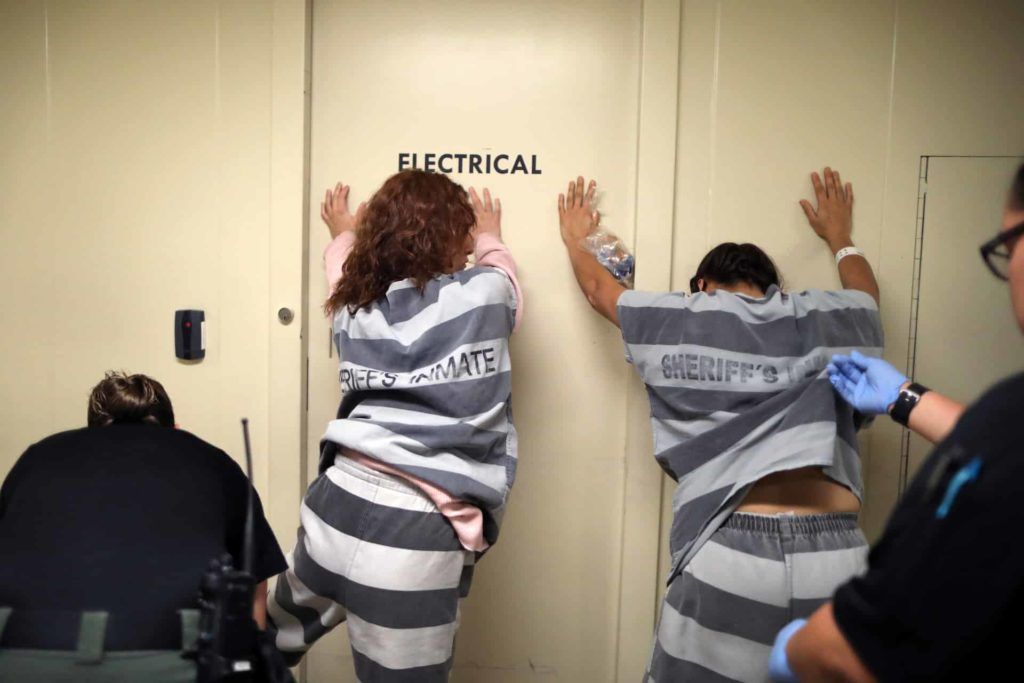
The Economics of Prison Labor vs. Commissary Prices
The financial math of managing a period in prison is staggering:
Sub-Standard Wages: The average prison job pays between $0.12 and $0.40 per hour. In some states, such as Texas and Georgia, inmates are not paid at all for their labor.
Inflated Prices: A single box of tampons or pads in a prison commissary can cost anywhere from $4.00 to $8.00.
The Math: For an inmate earning $0.20 an hour, purchasing a single box of pads requires 20 to 40 hours of hard labor. This is the equivalent of a free person working a full 40-hour workweek just to afford a basic hygiene necessity. This stark reality underscores the injustice when prisons are still charging female inmates for having their periods, turning a biological necessity into an insurmountable financial burden, and highlighting the severe lack of menstrual equity.
When inmates cannot afford commissary prices because prisons are still charging female inmates for having their periods, they are forced to rely on state-issued supplies. However, these “free” products are notoriously inadequate. Many facilities ration them strictly, providing only a handful of thin, adhesive-free pads per cycle. To make matters worse, some guards weaponize these free supplies, requiring inmates to beg, trade sexual favors, or perform humiliating tasks just to receive a single pad, further eroding their human dignity and denying dignified treatment.
Menstruation as Misconduct: How Biology is Weaponized
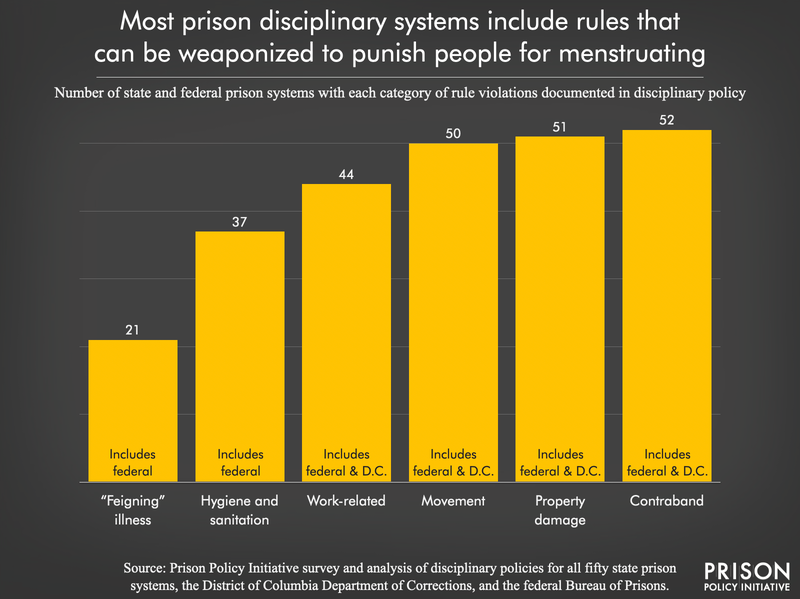
A groundbreaking analysis by advocacy groups, including the Prison Policy Initiative (PPI), has exposed a darker side of this crisis: the criminalization of menstruation itself, exacerbated by the fact that prisons are still charging female inmates for having their periods. Prisons are highly regimented environments governed by strict, often arbitrary rules. When these rules fail to account for basic human anatomy, menstruating individuals are trapped in a cycle of disciplinary action, demonstrating a failure of correctional healthcare standards.
The “Contraband” Trap
Because high-quality menstrual products are scarce, largely due to the fact that prisons are still charging female inmates for having their periods, they carry immense value within prison walls. Inmates frequently share products, trade them for other necessities, or attempt to hoard them to prepare for their next cycle. In the eyes of prison administrators, this survival behavior is classified as illegal trading or possession of contraband, a direct consequence of inadequate access to hygiene products.
Write-ups for Sharing: Inmates caught giving a tampon to a peer who is bleeding through their uniform can face disciplinary write-ups.
Hoarding Charges: Keeping more than a government-allotted number of pads in a cell is often treated as hoarding contraband, resulting in the confiscation of the products and loss of privileges.
Punished for Bleeding Through
Perhaps the most cruel aspect of carceral period poverty is the punishment for accidental leaks, a direct consequence when prisons are still charging female inmates for having their periods and denying adequate supplies. When inmates are denied sufficient products, they inevitably bleed through their clothing, bedding, and onto prison floors. Instead of receiving medical attention or clean supplies, they are routinely written up for:
- Destruction of State Property: Bleeding on a prison-issued mattress or uniform is categorized as damaging state property.
- Poor Hygiene / Creating a Biohazard: Inmates are penalized for failing to maintain cleanliness, even when the facility has denied them the tools to do so.
- Inappropriate Dress: Wearing stained clothing because clean laundry is unavailable can lead to disciplinary action.
These write-ups are not minor inconveniences. They can result in solitary confinement, loss of family visitation rights, loss of commissary access, and even the denial of parole, effectively extending an inmate’s prison sentence simply because they had a period, a situation made worse when prisons are still charging female inmates for having their periods, undermining dignified treatment and reproductive justice.
The Scale of the Crisis in 2026
The number of women in U.S. prisons has grown exponentially over the last few decades, rising from roughly 26,300 in 1980 to over 180,000 today. Despite this massive demographic shift, carceral infrastructure remains deeply patriarchal, designed by men, for men, failing to implement gender-responsive policies that address the unique needs of incarcerated women’s health.
Currently, only 25 states have passed legislation requiring state prisons and local jails to provide free, unlimited menstrual products to incarcerated individuals. This leaves half of the country completely unregulated, allowing local sheriffs and private prison corporations to dictate how—and if—menstruating people receive care, further perpetuating period poverty.
| Legislative Status (2026) | Scope of Coverage | Impact on Inmates |
| :— | :— | :— |
| Federal Prisons | 100% Free Access | Covers only ~10% of the incarcerated population. |
| 25 Regulated States | Mandated Free Access | Improved access, though implementation and quality vary wildly by facility. |
| 25 Unregulated States | Left to Facility Discretion | High rates of commissary charging, product deprivation, and disciplinary action. |
This legislative patchwork means that an inmate’s human rights depend entirely on the geographic location of their prison, especially when prisons are still charging female inmates for having their periods. In unregulated states, private prison operators profit directly from commissary sales, creating a direct financial incentive to keep free state-issued products as low-quality and scarce as possible, a clear obstacle to achieving menstrual equity.
A Global Human Rights Failure
While the United States represents one of the largest carceral systems in the world, the weaponization of menstruation is a global issue, mirrored by how prisons are still charging female inmates for having their periods in many regions. In correctional facilities worldwide, women are systematically neglected, forced to navigate their menstrual cycles without basic plumbing, clean water, or access to hygiene products.
In developing nations, the crisis is even more acute. Incarcerated women are often left entirely reliant on family members to bring them sanitary pads and tampons during visits. If they have no family support, they are left with nothing, forced to use newspapers, old rags, or leaves, leading to severe reproductive tract infections and systemic health crises. This global neglect underscores a universal truth: carceral systems worldwide consistently fail to view female biology as a basic human right, denying dignified treatment to vulnerable populations.
The Health and Constitutional Implications
The refusal to provide adequate, free menstrual products is not just a policy failure; it is a violation of the law and a severe threat to public health, directly impacting incarcerated women’s health.
An Eighth Amendment Violation
Legal scholars and human rights advocates argue that depriving inmates of menstrual products, especially when prisons are still charging female inmates for having their periods, constitutes cruel and unusual punishment, violating the Eighth Amendment of the U.S. Constitution. The Supreme Court has established that prisons must provide “basic human needs,” including food, shelter, sanitation, and medical care. Denying a menstruating person the means to manage bodily fluids safely directly violates this constitutional standard and falls short of acceptable correctional healthcare standards.
Severe Physical and Mental Health Risks
When prisons are still charging female inmates for having their periods, those who cannot pay are forced to improvise. Inmates routinely construct makeshift tampons and pads out of:
Torn prison blankets and clothing
Toilet paper and paper towels
Dirty socks
- Cardboard packaging
These improvised materials are highly unhygienic, a dangerous consequence when prisons are still charging female inmates for having their periods and forcing inmates to resort to such measures. Using them for extended periods increases the risk of Toxic Shock Syndrome (TSS)—a life-threatening bacterial infection—as well as bacterial vaginosis, severe urinary tract infections (UTIs), and long-term reproductive health complications, severely compromising incarcerated women’s health and their reproductive justice.
Furthermore, the psychological toll is devastating, a direct result of policies where prisons are still charging female inmates for having their periods. Being forced to walk around in blood-stained clothing, begging guards for pads, and facing public humiliation strips inmates of their basic human dignity. It fosters an environment of shame and depression, compounding the trauma of incarceration and hindering successful rehabilitation, further emphasizing the need for dignified treatment.
How We Can Force Change: The Path Forward
1. Pass the Federal Menstrual Equity for All Act
Advocates are pushing for federal legislation that would require all state and local facilities receiving federal funding to provide free, high-quality menstrual products, directly addressing the issue that prisons are still charging female inmates for having their periods and striving for true menstrual equity.
2. Support Grassroots Advocacy Groups
Organizations like the Prison Policy Initiative (PPI), the ACLU, and Period.org are working on the ground to document abuses, file lawsuits, and lobby state legislatures. Supporting these organizations helps keep pressure on policymakers to implement gender-responsive policies.
3. Demand Transparency and Oversight
Independent oversight of state prisons and local jails is desperately needed to ensure that prisons are still charging female inmates for having their periods is brought to an end. Regular, unannounced audits of commissary pricing, product availability, and disciplinary records can help expose facilities that continue to punish inmates for menstruating, ensuring adherence to correctional healthcare standards.
Conclusion
The fact that in 2026, prisons are still charging female inmates for having their periods is a stain on the justice system. Menstruation is not a choice, nor is it a luxury. It is a healthy, normal biological function that requires clean, safe, and dignified treatment.
By treating sanitary pads and tampons as commodities to be bought and sold, and by punishing those who cannot afford them, the carceral system perpetuates a cycle of abuse that targets the most vulnerable populations. True prison reform cannot exist without gender equity. It is time to stop profit-making off of biology, eliminate punitive menstrual policies, and restore basic human dignity to every incarcerated person, ensuring menstrual equity and reproductive justice for all.