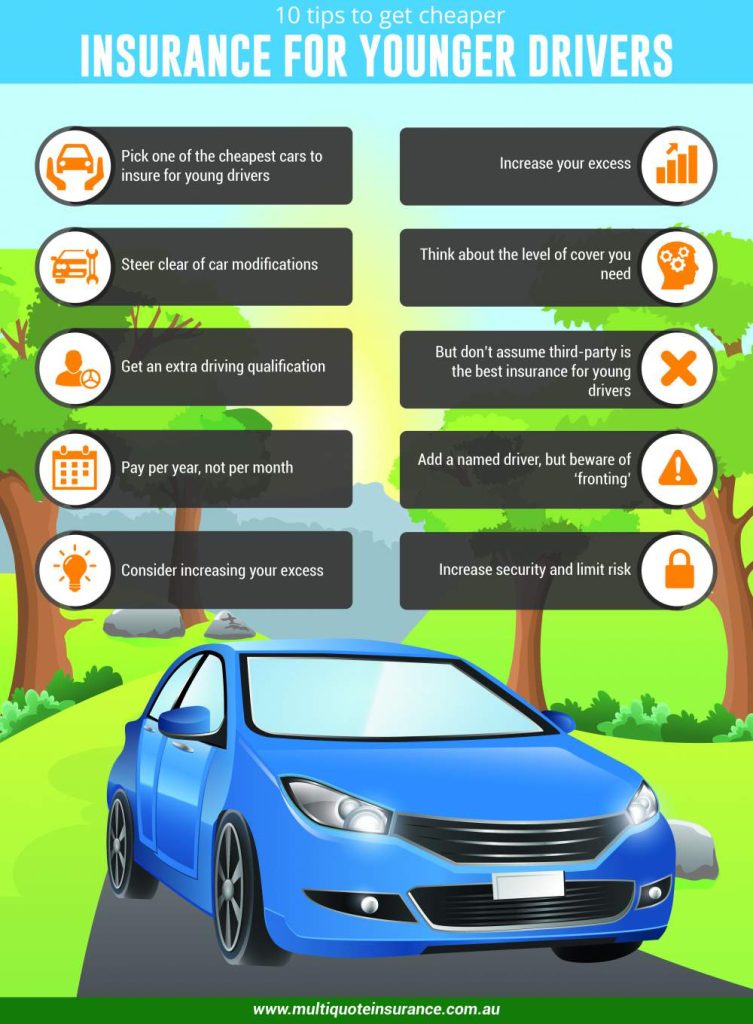
If you are a young driver or the parent of one, you already know the frustration: car insurance premiums feel like a financial penalty for simply being young. The reality is that the insurance industry operates on cold, hard data. Because statistics show that drivers between the ages of 17 and 25 are statistically more likely to be involved in accidents due to inexperience, distractions, or risky driving behaviors, insurers hike up the prices accordingly.
But here is the good news: you do not have to settle for the first quote you see. With the right strategy and inside knowledge of how the industry works, you can drastically reduce your insurance burden. In this guide, we break down exactly how to navigate the 2026 insurance market with essential car insurance tips for young drivers to save money while maintaining the protection you need.
Why Is Car Insurance So Expensive for Young Drivers?
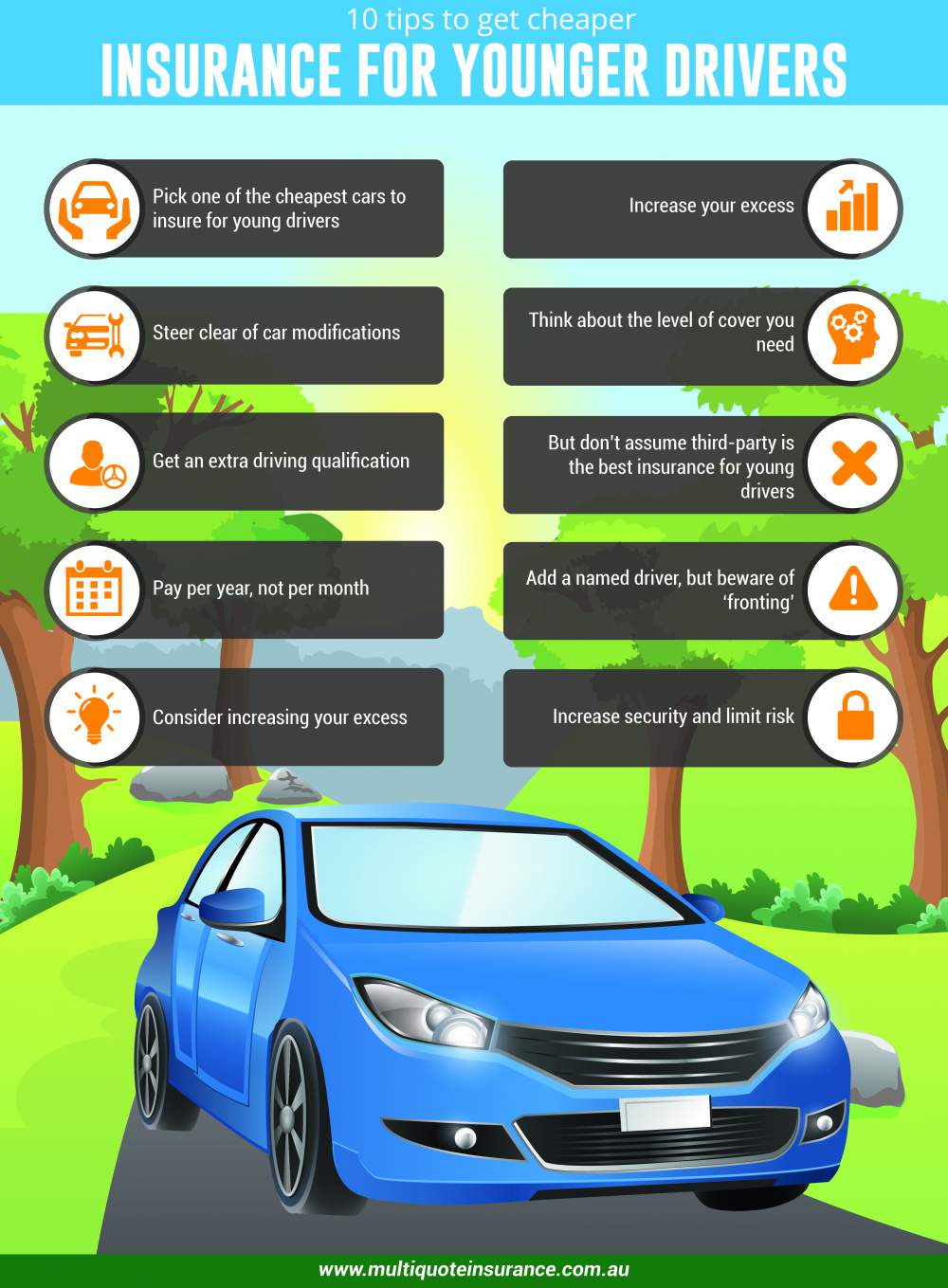
Before you can lower your bill, understanding these car insurance tips for young drivers starts with knowing why the numbers are so high. Insurance companies use complex algorithms to assess your risk profile. If you fall into the young driver category, you are flagged as "higher risk" based on several key industry factors.
Lack of Driving Experience
Experience is the greatest teacher on the road. Younger drivers often lack the ability to anticipate hazards, read road conditions, or make split-second decisions that only come with thousands of hours behind the wheel. Nearly 40% of young drivers have been involved in a crash by age 23, which confirms the industry’s suspicion that inexperience leads to more claims.
Statistical Accident Risk
Beyond experience, lifestyle factors play a role. The CDC highlights that teenagers face a significantly higher risk of accidents when driving at night or with other young passengers. Insurers see these trends and raise premiums to account for the higher probability of a claim payout.
Limited No-Claims Bonus
A no-claims bonus (NCB) is a discount earned for every year you go without filing an insurance claim. Since you are just starting out, you have no history to prove your safety. This lack of a "track record" means you start at the highest baseline premium. However, the goal is to protect your record once you start building it, as this is the most effective way to secure lower rates over time.
Proven Strategies to Slash Your Insurance Costs
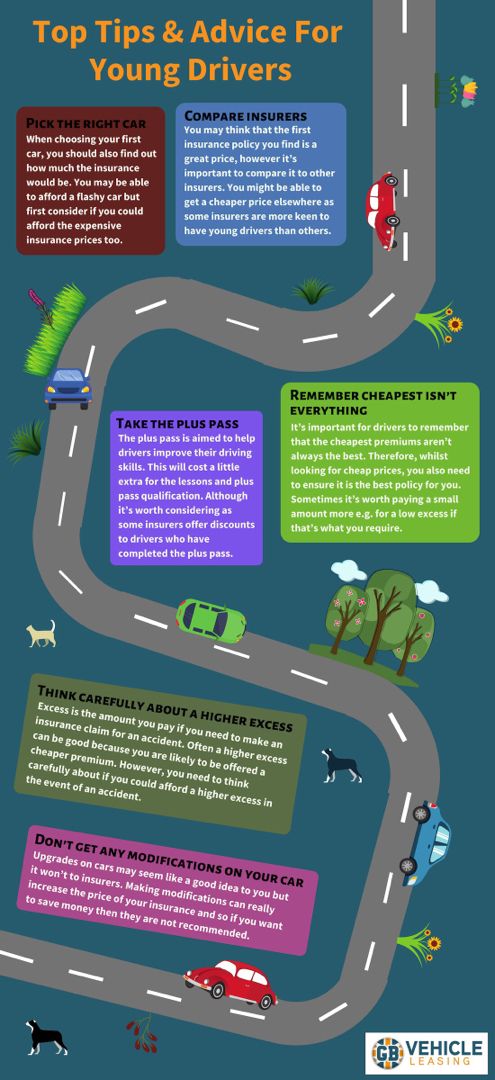
You do not have to accept the "young driver tax." By shifting your strategy and being proactive, you can take control of your financial future. Here are the most effective car insurance tips for young drivers to lower your rates in 2026.
1. Stay on a Family Policy
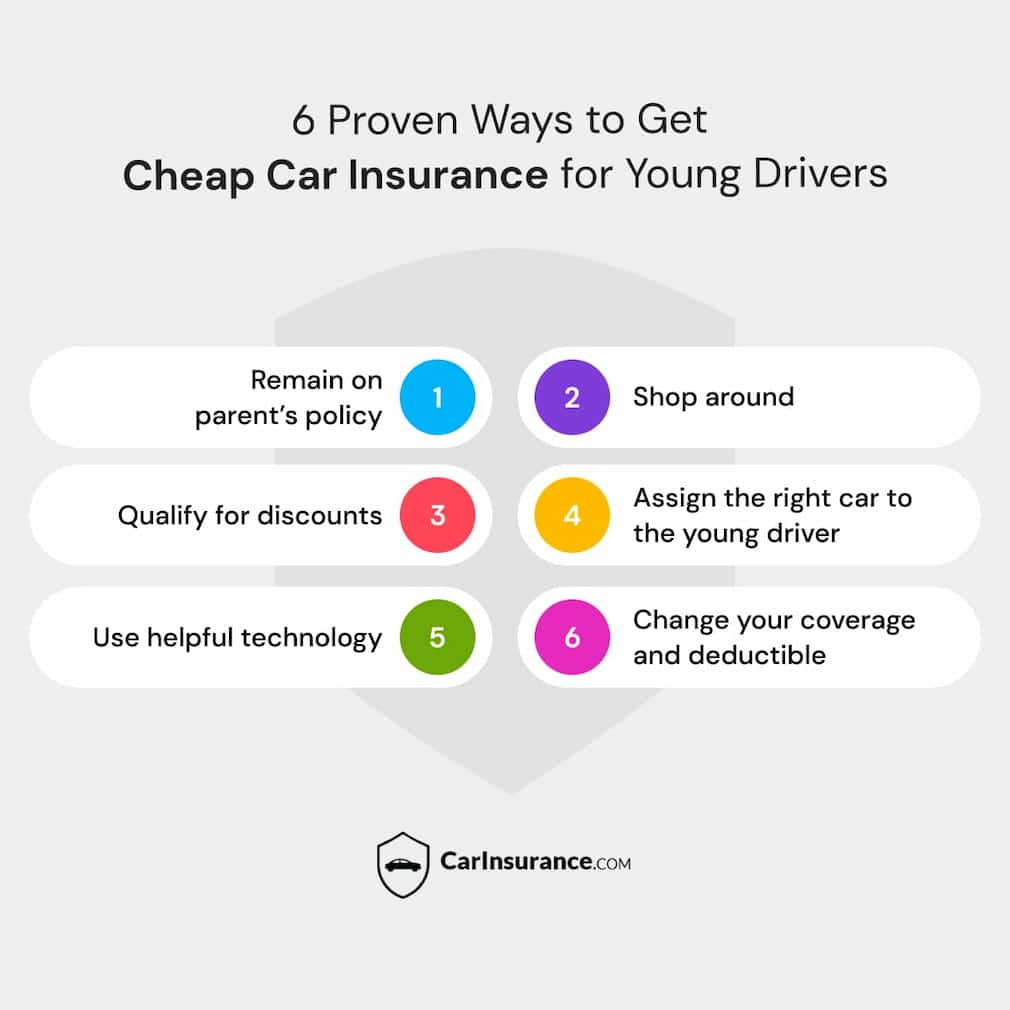
If you are a teen or a college student, one of the top car insurance tips for young drivers is to remain on your parent or guardian’s policy. Insurance companies offer multi-driver discounts that can shave 20% to 50% off your total costs. By bundling a young driver into an existing policy, you benefit from the parent’s mature driving history, which offsets your higher individual risk rating.
2. Prioritize "Good Student" and Other Discounts
Many insurers offer specific discounts that are easy to qualify for, providing valuable car insurance tips for young drivers looking to save. If you maintain a B average or higher, you can often secure a "Good Student" discount, which typically ranges from 5% to 25%. Additionally, always inquire about:
- Distant Student Discounts: If you are away at college and do not have your car with you, you may qualify for a massive reduction.
- Defensive Driving Course Discounts: Completing an accredited course proves to your insurer that you are prioritizing safety, which can lead to lower, long-term premiums.
3. Choose the Right Vehicle
Insuring a 300-horsepower sports coupe is a recipe for high premiums, making vehicle choice one of the crucial car insurance tips for young drivers. Insurers look at the "risk" of the car itself—specifically safety ratings and theft statistics. Choosing a safe, practical, and reliable vehicle will immediately lower your quote. Before you buy your next car, run an insurance quote on the make and model to ensure it won’t wreck your monthly budget.
Comparing the Best Carriers for 2026
Not all insurance companies view young drivers the same way, which is why comparing carriers is key among car insurance tips for young drivers. Some carriers, such as Auto-Owners, Erie, Travelers, and GEICO, are frequently cited as the top performers for both affordability and coverage quality for young adults.
When you start your shopping journey, remember that national carriers might offer huge digital convenience, but regional carriers like Auto-Owners or Erie often provide significantly cheaper rates for young demographics, a vital piece of car insurance tips for young drivers. Your goal is to request quotes from at least three different companies to ensure you have a baseline for what a "fair" price looks like for your specific situation.
The Power of Annual Rate Drops
It is important to remember that this high-cost phase is temporary, and these car insurance tips for young drivers are designed to help you navigate it. As you move into your early 20s, the financial pressure begins to ease. While young drivers (ages 20–24) pay an average of $3,092 annually, this is a significant improvement over the $5,914 average seen in the mid-teen years. Once you hit the age of 25, you will find that the insurance market treats you as a completely different risk profile, and your premiums will naturally drift toward the adult average of approximately $1,908.
Stay consistent, maintain a clean driving record, and always check for new discounts as you reach these milestones. By managing your policy with the same care you manage your car, you can ensure that you are always paying the minimum possible for maximum coverage.
Mastering the Art of Shopping for Quotes
If you think the first price you receive is the price you must pay, you are leaving money on the table, which is why mastering the art of shopping for quotes is one of the best car insurance tips for young drivers. The insurance market is fiercely competitive, and companies are constantly vying for market share. Because your profile as a young driver is inherently "high risk" to their actuarial models, the variance between the most expensive and the cheapest carrier can be thousands of dollars annually Source 1. You aren't just shopping for a policy; you are shopping for a partner that sees past the age on your driver’s license.
The Five-Minute Comparison Strategy
To get the most value, you must treat your insurance search like a professional acquisition. Using comparison tools that analyze data from hundreds of carriers is the fastest way to weed out companies that are clearly overcharging you for your demographic.
- Use Comparison Tools: Platforms that aggregate quotes allow you to input your data once and see a side-by-side view of premiums.
- Check Financial Ratings: Don’t just look at the price. Ensure the carrier has a strong financial rating (such as an AM Best rating) to ensure they can actually pay your claims when it matters most Source 3.
- Vary Your Deductible: If you have a small emergency fund, raising your deductible from $500 to $1,000 can result in an immediate decrease in your annual premium.
Transparency in Data Usage
Insurance companies rely on Big Data to predict your behavior. They look at your credit score (where legally allowed), your location, and even your vehicle’s history. Understanding that these inputs drive your price gives you the power to influence them. For example, maintaining a healthy credit score can indirectly lower your car insurance rates, as many insurers use insurance-based credit scores to calculate risk premiums.
Beyond the Basics: Advanced Savings Tactics
Once you’ve exhausted the standard discounts, it’s time to dig into the "insider" strategies that many young drivers never discover, offering advanced car insurance tips for young drivers.
4. Telematics and Usage-Based Insurance (UBI)
Modern technology has revolutionized how insurers price policies, and leveraging it is one of the smartest car insurance tips for young drivers. If you are a safe driver—meaning you don't speed, brake harshly, or use your phone while driving—you are the perfect candidate for telematics programs.
- The "Pay-How-You-Drive" Model: By installing an app or a small plug-in device in your car, your insurer tracks your actual driving habits rather than relying on generalized statistics.
- Real-Time Savings: Safe driving behavior is rewarded with discounts, sometimes up to 30% or more, which can be the difference between an unaffordable policy and one that fits your budget perfectly.
- The Caveat: Be aware that "aggressive" driving data can actually increase your rates with some carriers. Only opt into these programs if you are confident in your road discipline.
5. Adjusting Your Coverage Limits
There is a fine line between being "fully protected" and "over-insured," a crucial consideration in car insurance tips for young drivers. While you should never skimp on liability insurance—especially given the high cost of medical bills and legal fees in an accident—you may be able to adjust your collision and comprehensive coverage based on the current market value of your vehicle.
- Evaluate Your Vehicle Value: If you are driving an older, high-mileage vehicle that is worth less than the cost of your annual insurance premium, you might consider dropping collision and comprehensive coverage.
- Liability is Non-Negotiable: Never lower your bodily injury and property damage liability limits below your state’s minimum, and ideally, carry higher limits to protect your future earnings.
- Gap Insurance Considerations: If you are financing a new car, gap insurance is essential, but try to source it through your insurer rather than the dealership, where it is often marked up significantly.
6. The "Delay" Strategy
It might sound counterintuitive to wait to get your license, but the data is clear: the age at which you become licensed directly impacts your risk profile, an unconventional but effective strategy among car insurance tips for young drivers. This is because you start your driving history at an age where you are statistically less likely to cause a catastrophic, expensive accident.
Navigating the Claims Process as a Young Driver
The true test of your car insurance policy isn't the premium you pay; it is how the company treats you when you actually file a claim, making understanding the process vital for car insurance tips for young drivers.
What to Do Immediately After an Incident
Preparation is your best defense against predatory practices or accidental self-incrimination.
- Document Everything: Take photos of the scene, the vehicle damage, and the surroundings. This evidence is crucial for your claims adjuster.
- Exchange Information Carefully: Get the other driver’s insurance details, contact info, and photos of their license plate. Never admit fault at the scene, as this can complicate your claim and impact your future premiums.
- Police Reports: Always file a police report, even for minor accidents. It provides an unbiased account of the event, which is essential for your insurance company to settle disputes.
Understanding Premium Hikes After a Claim
One of the most stressful aspects of being a young driver is the fear of rate increases, which is why these car insurance tips for young drivers include strategies to mitigate them. It is an industry reality: an at-fault accident will almost always trigger a rate hike. However, you can mitigate this by:
- Accident Forgiveness: Many top-tier carriers offer "accident forgiveness" as a perk. Check your policy to see if you have this, as it can prevent your rates from skyrocketing after your first mistake.
- Choosing Your Battles: If the damage is minimal—for instance, a small scratch that costs $300 to fix—consider paying for the repair out of pocket rather than filing a claim. The long-term cost of a premium increase often outweighs the one-time payout.
The Role of Vehicle Choice in Long-Term Savings
We mentioned choosing the right car, but let’s look at the mechanics of why specific models attract lower premiums, a key element of car insurance tips for young drivers. It isn't just about the horsepower. Insurers analyze repair costs, part availability, and crash test results from organizations like the IIHS (Insurance Institute for Highway Safety).
Why "Safe" Isn't Just About Airbags
When an insurance underwriter looks at your vehicle, they see a pool of repair costs. A luxury import might be incredibly safe, but the replacement cost of a single headlight or sensor can be thousands of dollars.
- High-Cost Parts: Vehicles with advanced, proprietary technology are more expensive to repair, which forces the insurer to charge higher premiums.
- The Theft Factor: Certain older vehicle models are targeted by thieves due to high demand for parts. If your car is on a "most stolen" list in your area, your comprehensive premium will be substantially higher.
- Practicality Scores: Opting for a mainstream, mass-produced vehicle—like a reliable sedan or a mid-sized crossover—is often the "hack" for lowering insurance costs. Parts are abundant, mechanics know how to fix them, and the overall replacement value is manageable.
Understanding the "Young Driver" Lifecycle
The transition from a "teen driver" to an "adult driver" is a gradual, multi-year process in the eyes of insurance companies, and understanding this lifecycle is crucial for car insurance tips for young drivers.
The Milestone Age: 25
While you might think of 18 as the age of legal adulthood, the insurance industry usually marks age 25 as the threshold for a significantly lower risk rating, a key milestone in car insurance tips for young drivers. This is based on years of crash data showing that the prefrontal cortex—the part of the brain responsible for impulse control—is fully developed by this age.
- Monitor Your Rates: As you approach your 25th birthday, start reaching out to your agent or shopping for new quotes. Your premium should naturally begin to decline.
- Maintain Your Record: The most critical thing you can do between 18 and 25 is to keep your driving record clean. A single DUI or major moving violation can keep you in the "high-risk" bracket well into your late 20s.
Why Regional Carriers Outperform
It is a common mistake to assume that the largest national carriers are always the cheapest, highlighting the importance of exploring all options when seeking car insurance tips for young drivers. While they spend billions on advertising, regional carriers like Auto-Owners or Erie often have lower overhead and a more localized understanding of risk Source 3.
- Localized Risk Assessment: Regional carriers may offer better rates because they have a deeper data pool for your specific region, allowing them to price more accurately than a giant national firm that uses a "one-size-fits-all" algorithm.
- Personalized Service: Often, you will find that these companies provide better customer service during the claims process because they rely on their reputation within smaller, local communities.
The Financial Psychology of Deductibles
Many young drivers struggle with the concept of a deductible, but understanding its financial psychology is one of the most impactful car insurance tips for young drivers. They fear that a high deductible makes their insurance "useless." In reality, a higher deductible is a lever for savings.
The Math of Risk Management
If you choose a $1,000 deductible instead of a $250 deductible, you are essentially telling the insurer: "I am willing to take on a larger portion of the financial burden for minor incidents." In return, the insurer slashes your annual premium.
- The Buffer Strategy: Use the money you save annually on premiums to fund a dedicated "insurance deductible account." If you go three years without an accident, you have essentially paid yourself the money that you would have otherwise given to the insurance company.
- Avoiding Small Claims: This strategy also keeps you from filing "nuisance claims" for minor dents or scratches. Maintaining a clean claims history is the absolute best way to ensure your rates remain stable over the long term.
The Hidden Impact of Your Credit Score
In many states, insurance companies use your credit-based insurance score to determine your risk, an often-overlooked aspect of car insurance tips for young drivers. This is often an overlooked aspect of car insurance that heavily affects young adults just starting to build their financial lives.
Connecting Credit to Premium
It might seem unfair that your financial habits affect your road safety, but the statistics show a correlation: drivers with higher credit scores are statistically more likely to pay their premiums on time and less likely to file fraudulent claims.
- Credit Building Habits: By paying your credit cards on time and keeping your balances low, you are helping yourself in every area of your financial life, including insurance.
- Check Your Score: If you are a young adult, keep an eye on your credit reports. If you find errors, dispute them immediately. A single incorrect mark could be raising your insurance premiums without you even knowing it.
The Role of Parental Influence and Supervision
Even if you are an independent young driver, the involvement of parents or mentors can be a massive financial advantage, providing invaluable car insurance tips for young drivers. Insurance companies look favorably upon households that have a history of safe driving and stable policy management.
Establishing a Legacy of Safety
If you started your driving career under your parents' policy, you have effectively "borrowed" their safety rating. As you move to your own policy, you can actually request a "letter of experience" from your previous insurer.
- Proving Your History: A letter of experience acts as a formal record of your time as a licensed driver without claims. Some insurers will accept this to give you a "prior insurance" discount, which is significantly better than being treated as a brand-new driver.
- Ongoing Mentorship: Even after moving to your own policy, keeping an open line of communication with experienced drivers can help you avoid the pitfalls that lead to accidents and subsequent rate hikes.
Avoiding Common Insurance Pitfalls
There are several traps that young drivers frequently fall into that can result in unnecessary expenses or, worse, a gap in coverage that leaves them unprotected, making these car insurance tips for young drivers on avoiding pitfalls essential.
1. The "Lapsed Coverage" Trap
Never let your policy expire. Even if you are going to be away for a few months or if you are between cars, keep a "named non-owner" policy or a minimal coverage plan. A lapse in insurance coverage is a major red flag to underwriters, and when you go to start a new policy, you will be penalized with significantly higher quotes.
2. Not Verifying Policy Limits
Many young drivers sign the first document sent to them without looking at the coverage limits. Always verify that you have adequate:
- Uninsured/Underinsured Motorist Coverage: This is vital. If someone hits you and they don't have insurance (which happens more often than you think), this coverage pays for your repairs and medical bills.
- Medical Payments (MedPay) or PIP: This covers your health costs regardless of who is at fault in the accident. It is an essential layer of protection for young drivers who may not have robust individual health insurance.
3. Misrepresenting Your Driving Profile
Never lie on your insurance application. This includes where the car is garaged, who the primary driver is, or your annual mileage. If you claim to drive 5,000 miles a year when you actually drive 20,000, and you get into an accident, the insurance company can deny your claim entirely. They have the resources to verify your mileage through your repair shop history, so honesty is the only viable long-term strategy.
Leveraging Technology for Better Rates
Beyond telematics, technology plays a massive role in how you interact with your insurer, offering modern car insurance tips for young drivers. Using the digital tools provided by your carrier can save you time and money.
Managing Your Policy via Mobile Apps
Almost every major carrier now has a robust mobile app. Use it for:
- Documenting Proof of Insurance: Stop carrying paper; keep your proof of insurance in the app so you never lose it.
- Instant Quote Adjustments: If you are buying a new car, you can often add it to your policy and see the price difference instantly, allowing you to "test" different vehicles before you pull the trigger at the dealership.
- Roadside Assistance: Keep your roadside assistance info within the app so that if you break down, you can request help with a single tap.
The Power of "Bundle" Discounts
If you have a renter’s insurance policy or a motorcycle policy, ensure they are all with the same carrier. The multi-policy discount is one of the most reliable ways to shave 10-15% off your car insurance premium. It’s an easy win that takes five minutes to set up and provides savings for as long as you keep the policies active.
Handling the "New Driver" Documentation
When you first get your license, the insurance company doesn't "know" who you are, which is why proactive documentation is one of the best car insurance tips for young drivers. You have to be the one to provide the evidence of your safety and your status.
What You Should Proactively Send
- Driver Training Certificates: Even if you aren't a teen, many insurers offer discounts for advanced defensive driving certificates.
- Good Student Evidence: Keep your transcripts handy. Every semester, send an updated copy of your grades to your insurance agent to ensure the discount is applied.
- Mileage Reports: If your car is rarely used—perhaps you bike to work and only use the car on weekends—tell your insurer. Some companies offer "low mileage" discounts that can save you significant cash.
Why Your ZIP Code Matters
Where you live has a massive impact on your premiums, an often-surprising detail in car insurance tips for young drivers. This is due to local crime rates, traffic density, and the cost of medical care in your area.
The "Commute" Factor
If you move to a new apartment or a new city, notify your insurance company immediately. If you have moved from a high-crime urban area to a quieter suburb, your rates should drop. If you fail to update your garaging address, you are missing out on these savings—or worse, providing incorrect info that could void your policy during a claim.
The Importance of Routine Policy Reviews
You should treat your insurance as a living document, not a "set it and forget it" bill, making routine policy reviews one of the most important car insurance tips for young drivers. Every six months, when your policy is up for renewal, take 30 minutes to review your coverage and shop for new quotes.
What to Review Every Renewal
- Are your discounts still applied? Sometimes they drop off by mistake.
- Has your life changed? Did you graduate college? Did you get married? Did you move? Each of these is a potential trigger for a lower rate.
- Has the car’s value changed? As your car gets older, the payout for a total loss decreases, and you should ensure your premium reflects that reality.
The Human Element: Building a Relationship with an Agent
While it is tempting to handle everything through a screen, there is real value in having a dedicated insurance agent, a key component of comprehensive car insurance tips for young drivers. An agent can act as your advocate when you have a claim, and they can search for discounts that you might not even know exist.
The Benefits of a Local Agent
- Direct Access: When you have a question or a problem, you aren't talking to a call center robot; you are talking to a person who knows your name.
- Advocacy: If a claim gets denied or delayed, your agent can intervene and push the claims department for answers.
- Tailored Advice: An agent can look at your entire financial picture—home, car, life, and personal liability—and create a cohesive strategy that provides better coverage for a lower combined price.
Understanding the "Uninsured" Reality
It is a sobering statistic: millions of drivers are on the road without valid insurance, highlighting a critical area for car insurance tips for young drivers. As a young driver, you are disproportionately likely to be in a situation where the other driver doesn't have the means to pay for the damage they cause to your car or your person.
Protecting Your Future
- Uninsured Motorist Property Damage (UMPD): This pays for your car repairs if an uninsured driver hits you.
- Uninsured Motorist Bodily Injury (UMBI): This pays your medical bills if an uninsured driver injures you.
- The Bottom Line: Never skip these coverages. The few extra dollars per month are the most cost-effective investment you can make in your own physical and financial safety.
The Long-Term Vision for Young Drivers
You are building your "insurance reputation" right now, and these car insurance tips for young drivers are designed to help you build a strong one. Every year you go without a claim, every year you pay your premiums on time, and every year you avoid moving violations, you are adding value to your profile. By age 30, if you have managed this process correctly, you will find that you have access to the lowest possible rates and the best possible coverage options.
Patience is a Virtue
The "young driver tax" feels aggressive, and it is designed to protect the insurance pool from the statistical reality of inexperience, but these car insurance tips for young drivers empower you to overcome it. But you are not a statistic. You are an individual who can control your own variables. By following these steps—staying on family policies, choosing safe vehicles, utilizing discounts, and driving with discipline—you are successfully navigating one of the most difficult financial hurdles of early adulthood.
The Hidden Power of "Distant Student" Discounts
If you are currently a college student, you might be tempted to leave your car at home to save on gas, but this is also a golden opportunity for insurance savings, one of the lesser-known car insurance tips for young drivers.
How to Claim the Discount
- Verify Distance: Most insurers require you to be at least 100 miles away from home.
- The "No-Access" Clause: You must prove that you do not have access to the vehicle while you are at school.
- The Benefit: This can result in a "dormant" status for your vehicle, which drastically reduces your premiums because the risk of you driving that car in your home area is near zero.
Understanding "Full Coverage" vs. Liability
Young drivers often hear the term "full coverage," but it’s important to understand that this isn't a legal term; it’s a marketing phrase, a crucial distinction in car insurance tips for young drivers. You need to know exactly what is in your policy.
Defining Your Protection
- Liability: Mandatory. Pays for the damage you do to others.
- Collision: Optional. Pays for your car repairs after a crash, regardless of who is at fault.
- Comprehensive: Optional. Pays for "non-crash" damage, such as theft, fire, vandalism, or hitting a deer.
- Medical/PIP: Recommended. Pays for your health expenses after an accident.
When you look at your "declarations page," don't look at the total price. Look at each of these individual line items. Are they what you need? Are they the limits you want? Being an informed consumer is the first step toward being a financially secure one.
Handling the Transition to Your Own Policy
The day you buy your first car and get your own policy is a rite of passage, and these car insurance tips for young drivers will help you prepare for the financial shift. It is also the day your premiums will likely see a significant spike.
Preparing for the Financial Shift
- Budget Accordingly: Don't buy the car based on the sticker price; buy it based on the "sticker price plus insurance."
- Shop Early: Start getting quotes for the vehicle you want to buy before you drive it off the lot.
- Ask for Discounts: Even on your first solo policy, ask about "advance purchase" discounts, "paperless" discounts, and "paid in full" discounts. Paying your annual premium in one lump sum is often 5-10% cheaper than paying monthly installments.
The Critical Importance of "Gap Insurance"
If you are financing your car and you total it in the first year, your insurance payout might not cover the full amount of your loan, making gap insurance a critical part of car insurance tips for young drivers. This is because car insurance pays for the current market value of the car, not the amount you still owe on the loan.
Why You Need Coverage
- The Depreciation Trap: A new car loses value the moment it leaves the lot. If you owe $20,000 but the insurance company values the car at $17,000, you are on the hook for that $3,000 difference.
- The Solution: Purchase "gap insurance" through your primary carrier. It is usually much cheaper than the version offered by the dealership, and it provides a vital safety net that prevents a bad accident from turning into a life-altering debt.
Dealing with High-Risk Classifications
Sometimes, due to a previous accident or a ticket, you might be labeled a "high-risk" driver, but these car insurance tips for young drivers offer a path to rehabilitation. If this happens, don't panic. You aren't stuck forever.
The Path to Rehabilitation
- The "Clean Record" Clock: Most moving violations drop off your record after three years. If you stay clean for three years, your premiums will naturally adjust.
- High-Risk Specialists: If no standard carrier will accept you, there are specialized insurance companies that cater to high-risk drivers. These policies are expensive, but they are a temporary bridge to keep you legal until your record clears.
- Improve Your Risk Profile: Take a state-approved defensive driving course even if you aren't required to. It shows the underwriters that you are actively taking steps to change your behavior, and some carriers will offer "good driver" overrides for those who put in the effort.
Understanding the "No-Claims" Philosophy
Your no-claims history is the most valuable currency you have in the insurance world, a fundamental principle in car insurance tips for young drivers. Think of every year you don't file a claim as an investment.
Why Every Claim Costs You
When you file a claim, you aren't just paying your deductible; you are paying for the next several years of increased premiums. Before you call your agent to report a minor incident, sit down and do the math:
- The Calculation: Estimate your premium increase over the next three years. Add that to your deductible. Is the total cost less than the repairs? If so, pay for the repairs yourself.
- The Exception: Always file a claim if there is significant property damage or any possibility of bodily injury. You are paying for insurance to cover the "catastrophic" risks; use it for that purpose.
Monitoring Your Digital Footprint
Insurance carriers are increasingly looking at your social media, your internet browsing habits, and your location data to assess risk, an emerging area of car insurance tips for young drivers. While this is still a developing area of the industry, it is wise to be aware that your digital life is part of your overall profile.
Digital Hygiene
- Privacy Settings: Keep your social media private.
- Responsible Posting: Avoid posting photos or videos of yourself driving recklessly, even if it’s "just for fun." This content can be subpoenaed in the event of an accident and used to prove negligence or intent.
- Data Integrity: Ensure that the information you provide to your insurance carrier matches the information in other public databases. Discrepancies can trigger manual reviews that lead to policy delays or premium hikes.
How Your Vehicle Color, Make, and Model Impact Reality
While the "red car is more expensive" myth is largely false, the model of the car is incredibly influential, a practical consideration in car insurance tips for young drivers.
What Actually Matters
- Safety Features: Cars with lane-keep assist, automatic emergency braking, and blind-spot monitoring are cheaper to insure because they prevent accidents.
- Theft Statistics: If you live in an area with high auto theft, avoiding the "most stolen" models can save you hundreds on your comprehensive coverage.
- Engine Size: It’s not just horsepower; it’s the type of engine. High-performance engines are often associated with high-risk driving behavior, and premiums reflect that.
The Role of Insurance in Your Financial Future
Your car insurance is not just an expense; it is a financial planning tool, and these car insurance tips for young drivers help you leverage it for a secure future. If you lose your car or face a massive lawsuit because of an accident, your entire financial life—your savings, your credit, your ability to pay for school—can be derailed.
Viewing Insurance as Protection
You are paying a professional firm to take on the risks you cannot afford to manage yourself. This is exactly how wealth is protected. By managing your insurance smartly and proactively, you aren't just "saving money"; you are ensuring that your path to success remains unobstructed.
The Future of Insurance for Young Drivers
As we move further into 2026 and beyond, the insurance landscape is shifting toward more personalized, data-driven policies, making these car insurance tips for young drivers even more relevant. The days of "blanket" pricing for all 18-year-olds are numbered.
Embracing the Future
- Greater Customization: Expect to see more policies that offer granular control over coverage—turning features on or off as needed.
- Better Data Utilization: Insurers will continue to refine their models, which means if you are a legitimately good driver, you will be rewarded more accurately than in the past.
- Staying Informed: The best thing you can do is stay educated. Subscribe to insurance blogs, review your policy every six months, and never be afraid to ask your agent, "What can I do to get this price lower?"
The "Family Policy" Nuance
Many families make the mistake of having their teen get their own policy too early, which is why understanding the "family policy" nuance is one of the most important car insurance tips for young drivers. This is almost always a financial error.
When to Stay on the Family Policy
- Until Age 25: If your parents are willing, stay on their policy. The household discount is powerful.
- When You Move Out: If you move to a different ZIP code, you may be required to get your own policy or at least register your car at your new address.
- The "Multi-Vehicle" Discount: If you are living at home and driving one of the family cars, make sure you are listed as a driver. Don't hide the fact that a young driver is using the vehicle, as this is a form of rate evasion that can lead to denied claims.
References
-
Bankrate — The best car insurance for young drivers – Bankrate, 2026
-
Forbes — Best Car Insurance For Teens And Young Drivers Of 2026, 2026
-
Insurance — Best cheap car insurance for teens and young drivers in 2026, 2026
-
Myinsurecar — Best Car Insurance for Young Drivers | Real Guide for Youth, 2026
-
Cnbc — Best Car Insurance For Teens in June 2026 – CNBC, 2026
-
Carinsurance — How to shop for car insurance for young drivers, 2026
-
Marketwatch — Best Car Insurance for Teens and Young Drivers – MarketWatch, 2026
-
Perfinsure — Cheap Car Insurance for Young Drivers: A Comprehensive Guide, 2026