
Heading off to college or starting a new semester is an exciting milestone, but it also brings a wave of practical challenges. Between managing tuition, buying expensive textbooks, and finding decent housing, the last thing you need is a vehicle that drains your bank account or breaks down on the way to a midterm exam.
Finding the best cars for students that are affordable and reliable is a top priority for young drivers and their parents alike. You need a vehicle that is cheap to buy, inexpensive to fuel, incredibly safe, and durable enough to last through graduation and beyond.
In this comprehensive guide, we will break down the absolute best cars for students in 2026, comparing new and used options, analyzing the hidden costs of ownership, and sharing expert tips on how to make a smart purchasing decision.
What Makes a Student Car “Affordable and Reliable” in 2026?
Before looking at specific models, it is important to define what actually makes a vehicle suitable for a student lifestyle. A flashy sports car or a massive SUV might look appealing, but they rarely make sense for a student’s budget.
When shopping for a vehicle, you should evaluate cars based on these three pillars:
1. Total Cost of Ownership (TCO)
The sticker price of a car is only part of the equation. You must also calculate the Total Cost of Ownership, which includes:
Fuel Economy: With fluctuating gas prices, driving a car that gets at least 30 MPG combined is a massive money-saver.
Insurance Premiums: Drivers under the age of 25 face some of the highest insurance rates. Compact sedans and hatchbacks are generally much cheaper to insure than sports cars or large trucks.
Maintenance and Parts: Brands like Toyota and Honda are famous because their parts are widely available and inexpensive to repair.
2. Safety Ratings and Technology
As a student, you will likely be driving in unfamiliar college towns, busy campus parking lots, and long highway stretches during holiday breaks. Look for vehicles with a 5-star safety rating from the NHTSA or those designated as a Top Safety Pick by the IIHS. Features like automatic emergency braking, lane-keeping assist, and blind-spot monitoring are highly recommended for younger drivers.
3. Long-Term Reliability
A reliable car is one that starts every single morning, regardless of the freezing winter weather or summer heat. We prioritize vehicles with a proven track record of reaching 150,000 to 200,000 miles with only basic, routine maintenance like oil changes and tire rotations.
Top 7 Best Cars for Students That Are Affordable and Reliable
The following vehicles represent the perfect sweet spot of budget-friendliness, safety, and bulletproof reliability for 2026. We have included a mix of highly dependable used models and budget-friendly new cars.
1. Toyota Corolla (Years: 2017–2026)
Average Fuel Economy: 30–40 MPG
Estimated Used Price: $12,000 – $19,000
Estimated New Price (2026): $22,500+
The Toyota Corolla is the undisputed king of student cars. It has spent decades building a reputation for being virtually indestructible. If you buy a well-maintained, five-year-old Corolla, it will easily get you through your undergraduate and graduate degrees without major mechanical issues.
For students driving in urban areas, the Corolla Hybrid offers even better fuel economy (often exceeding 50 MPG), which drastically cuts down on weekly gas expenses. It also comes standard with Toyota Safety Sense, which includes adaptive cruise control and pre-collision systems.
2. Honda Civic (Years: 2016–2026)
Average Fuel Economy: 31–40 MPG
Estimated Used Price: $13,000 – $21,000
Estimated New Price (2026): $24,500+
If you want something that feels a bit more spirited and stylish than a Corolla, the Honda Civic is your best bet. Available as both a sleek sedan and a practical hatchback, the Civic offers fantastic cargo space for moving in and out of dorm rooms.
Civics hold their resale value incredibly well. If you decide to sell the car after graduation, you will likely get a significant portion of your investment back. The interior is modern, user-friendly, and packed with intuitive tech like Apple CarPlay and Android Auto.
3. Mazda 3 (Years: 2018–2025)
Average Fuel Economy: 26–36 MPG
Estimated Used Price: $14,000 – $22,000
Estimated New Price (2026): $24,000+
The Mazda 3 is often described as a budget-friendly car with a luxury soul. Its cabin features premium materials that rival entry-level Audis and BMWs, but without the premium price tag or expensive maintenance costs.
Mazda’s reliability ratings have soared in recent years, making it a highly dependable option. Additionally, the Mazda 3 is one of the few compact cars in this price range that offers All-Wheel Drive (AWD), making it an exceptional choice for students attending universities in snowy climates.
4. Subaru Impreza (Years: 2017–2026)
Average Fuel Economy: 28–36 MPG
Estimated Used Price: $12,000 – $20,000
Estimated New Price (2026): $23,000+
For students heading to school in the Pacific Northwest, New England, or the Rocky Mountains, the Subaru Impreza is a top-tier choice. Unlike its competitors, the Impreza comes standard with Subaru’s legendary Symmetrical All-Wheel Drive system.
The Impreza hatchback offers massive utility, allowing you to easily pack up bikes, snowboards, or campus move-in gear. It also features Subaru’s EyeSight Driver Assist Technology, keeping you safe on icy highways and slick roads.
5. Kia Forte (Years: 2019–2026)
Average Fuel Economy: 29–39 MPG
Estimated Used Price: $11,000 – $17,000
Estimated New Price (2026): $20,000+
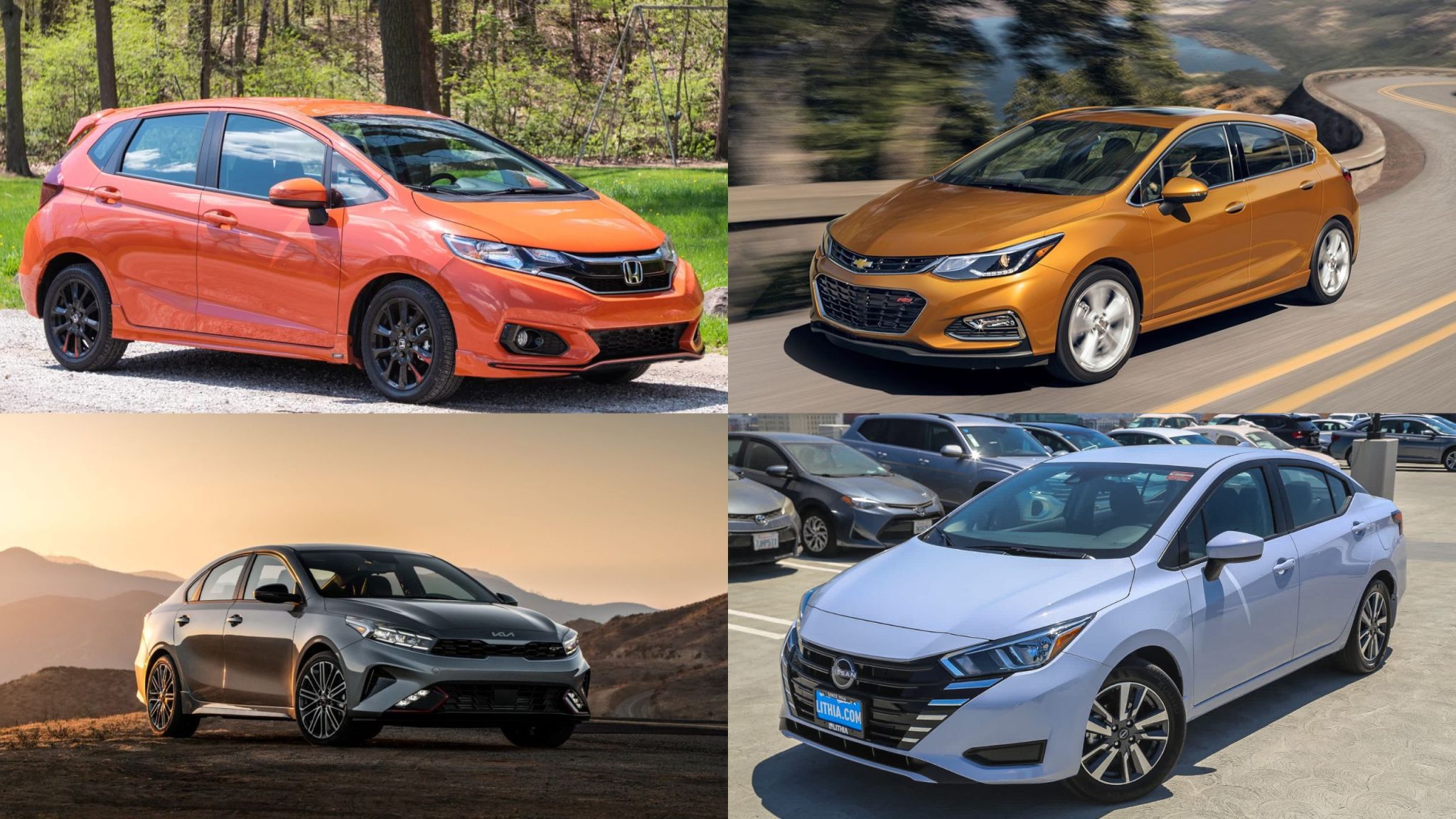
If you are buying new or slightly used, the Kia Forte offers some of the best value for your money on the market today. Kia is known for packing its vehicles with high-end tech features—such as large touchscreen displays, lane-keep assist, and wireless charging—at a lower price point than Japanese competitors.
Furthermore, if you buy a new or Certified Pre-Owned (CPO) Kia, you benefit from their industry-leading 10-year/100,000-mile powertrain warranty. This provides ultimate peace of mind for parents worried about unexpected repair bills.
6. Hyundai Elantra (Years: 2018–2026)
Average Fuel Economy: 30–40 MPG
Estimated Used Price: $12,000 – $18,000
Estimated New Price (2026): $22,000+
Much like its corporate sibling, the Kia Forte, the Hyundai Elantra stands out for its incredible warranty, modern styling, and high tech-to-dollar ratio. The Elantra boasts a spacious cabin with plenty of rear legroom, making it comfortable for road trips with roommates.
Its fuel economy is highly competitive, and the hybrid variant is exceptionally efficient for city driving around campus.
7. Toyota Prius (Years: 2015–2022)
Average Fuel Economy: 50–54 MPG
Estimated Used Price: $11,000 – $22,000
While the newer generation of the Prius has shifted toward a more premium price point, a used Toyota Prius from the late 2010s is a goldmine for students. It is arguably the most reliable hybrid ever built.
Its hatchback design offers SUV-like cargo capacity when the rear seats are folded flat. Best of all, you will rarely have to visit the gas station, keeping your monthly commuting costs remarkably low.
New vs. Used Cars for Students: Which is Better in 2026?
One of the biggest dilemmas students and parents face is deciding between a brand-new vehicle and a used model. Both paths have clear advantages and disadvantages depending on your financial situation.
Buying a Used Car: The Budget-Friendly Route
For the vast majority of college students, a reliable used car is the most sensible choice.
Pros:
Lower Depreciation: A new car loses roughly 20% of its value in the first year. By buying used, the previous owner absorbs that financial hit.
Cheaper Insurance: Used cars cost significantly less to insure, saving you hundreds of dollars annually.
Lower Purchase Price: You can easily find a highly reliable vehicle for under $15,000.
Cons:
Out of Warranty: You may have to pay out of pocket for repairs if something breaks.
Unknown History: Unless you buy from a trusted source, there is always a risk of hidden mechanical issues.
Buying a New Car: The Worry-Free Route
If you have a larger budget or access to low-interest financing, a new car can make sense.
Pros:
Full Warranty Coverage: Most new cars are covered for at least 3 to 5 years, meaning zero repair costs.
Latest Safety Features: You get access to the absolute best collision avoidance and driver assistance tech.
No History Worries: You know exactly how the car has been driven and maintained from day one.
Cons:
Higher Upfront Cost: Higher monthly payments and larger down payments.
- Expensive Insurance: New cars cost more to replace, leading to higher insurance premiums for young drivers.
The Hidden Costs of Student Car Ownership
When budgeting for the best cars for students that are affordable and reliable, many people forget to factor in the secondary costs of keeping a vehicle on campus. Make sure to account for these expenses before making your purchase:
| Expense Category | Average Annual Cost | Tips to Reduce the Cost |
| :— | :— | :— |
| Car Insurance | $1,500 – $3,500 | Stay on your parents’ insurance policy; ask for a Good Student Discount (usually requires a 3.0 GPA or higher). |
| Campus Parking Permits | $150 – $800 | Park in off-campus lots or use campus transit when possible; look for semester-based economy passes. |
| Routine Maintenance | $300 – $600 | Learn to do basic tasks yourself, such as replacing windshield wipers, cabin air filters, and checking tire pressure. |
| Fuel / Charging | $1,000 – $2,000 | Choose a highly efficient hybrid or compact car; use apps like GasBuddy to find the cheapest local stations. |
Smart Tips for Buying Your First Student Car
Buying a car can feel overwhelming, especially if it is your first time dealing with dealerships or private sellers. Use these expert tips to ensure you get a fair deal and a safe vehicle.
1. Always Get a Pre-Purchase Inspection (PPI)
If you are buying a used car, never rely solely on the seller’s word. Take the car to an independent, certified mechanic for a Pre-Purchase Inspection. For around $100 to $200, a mechanic will put the car on a lift and check for hidden issues like frame damage, engine leaks, or worn-out brakes. This step alone can save you thousands of dollars in unexpected repairs.
2. Check the Vehicle History Report
Always ask for a CARFAX or AutoCheck report. This document will show you if the car has been in any major accidents, if the odometer has been rolled back, how many previous owners it had, and whether it has a clean or salvage title. Avoid cars with “salvage” or “rebuilt” titles, as they are incredibly difficult to insure and may have compromised safety structures.
3. Consider Certified Pre-Owned (CPO)
If you want a middle ground between new and used, look for a Certified Pre-Owned (CPO) vehicle. These are gently used cars that have been thoroughly inspected by a manufacturer-certified dealership and come with an extended factory warranty.
4. Negotiate the “Out-the-Door” Price
When discussing prices at a dealership, do not focus on the monthly payment. Shady dealers can stretch out loan terms to make a expensive car look affordable month-to-month. Instead, negotiate the “Out-the-Door” (OTD) price, which includes the vehicle cost, taxes, registration, and dealership fees.
Conclusion
Choosing the right vehicle for your college years does not mean you have to sacrifice safety, style, or fun. By focusing on the best cars for students that are affordable and reliable, you can secure a vehicle that keeps your stress levels low and your bank account healthy.
Models like the Toyota Corolla and Honda Civic remain the gold standards for long-term dependability, while the Subaru Impreza offers unmatched safety in harsh winter climates. If you are looking for modern tech and excellent warranties on a budget, the Kia Forte and Hyundai Elantra are stellar modern choices.
Take your time, do your research, get a pre-purchase inspection, and choose a car that will support your academic journey all the way to graduation day!