
The automotive industry is no longer confined to the asphalt. As we move further into 2026, the integration of Satellite-to-Vehicle (S2V) communication, a critical component of broader Vehicle-to-everything (V2X) communication, has transformed the modern car into a high-speed data node. However, the sheer volume of telemetry, environmental sensor data, and navigation logs generated by autonomous fleets creates a massive bottleneck. The solution? Orbital Edge Computing (OEC).
By shifting the computational burden from distant ground stations to the satellite itself through efficient computational offloading, we are entering an era of real-time intelligence. This guide explores how to leverage edge computing to process satellite car data, reducing latency and enabling the next generation of autonomous mobility. Understanding How to use “Edge Computing” to process satellite car data is paramount for this evolution.
The Paradigm Shift: Why Traditional Cloud Processing Isn’t Enough
Historically, satellites acted as “bent pipes”—simple relays that beamed raw data down to ground-based servers. In 2026, this model is becoming obsolete. When a vehicle traveling at high speeds needs to make a split-second decision based on satellite-gathered weather or traffic data, waiting for a round-trip to a ground station is not an option. This highlights the critical need to master How to use “Edge Computing” to process satellite car data efficiently.
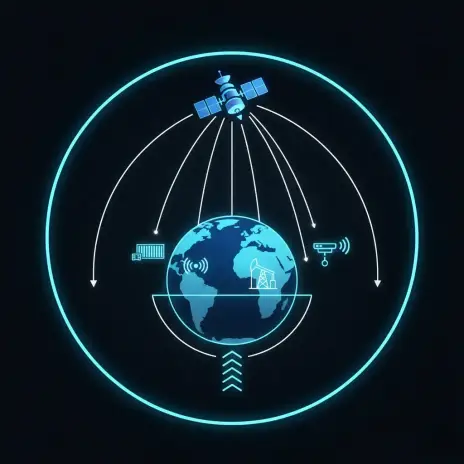
Edge computing allows satellites to act as autonomous processing nodes. By performing on-board data handling (OBDH), satellites can conduct real-time analytics to filter, compress, and analyze information before it ever reaches the user. This minimizes bandwidth consumption and ensures that the car receives only the most critical, actionable insights.
Core Technologies Enabling Space-Based Processing
To successfully implement edge computing for satellite-to-car data pipelines, and truly understand How to use “Edge Computing” to process satellite car data, developers must integrate three primary technological pillars:
1. Advanced On-Board Data Handling (OBDH)
Modern satellite architecture now features high-performance, radiation-hardened processors. These chips are capable of running Machine Learning (ML) inference models directly in orbit. By deploying lightweight neural networks, a satellite can process geospatial data to identify road hazards or traffic patterns in real-time, sending only the relevant alerts to the vehicle.
2. Distributed Satellite Systems (DSS)
No single satellite can cover every square inch of the globe. By utilizing satellite constellations, often referred to as distributed satellite systems, we create a mesh network in low-earth orbit (LEO). If one satellite reaches its computational capacity, it can offload processing tasks to a neighboring node, ensuring seamless data flow for moving vehicles.
3. Dynamic Software Loading
The ability to dynamically load software in orbit is a game-changer. Rather than launching hardware for a specific task, engineers can push over-the-air updates to the satellite. This allows the system to adapt to new vehicle communication protocols or emerging traffic management algorithms without requiring a hardware replacement.
Implementing the Workflow: A Step-by-Step Approach
If you are looking to integrate edge computing into your satellite-to-vehicle data architecture, and learn How to use “Edge Computing” to process satellite car data effectively, follow this strategic framework:
Step 1: Data Prioritization. Identify which data sets require immediate action. Critical safety data (e.g., sudden road obstructions) should be processed at the edge, while archival data (e.g., long-term vehicle performance logs for predictive maintenance) can wait for ground-station downlink.
Step 2: On-Orbit Filtering. Implement edge-based AI algorithms to strip away redundant sensor data. By removing noise at the source, you reduce the transmission cost by up to 70%.
Step 3: Low-Latency Protocol Selection. Utilize 5G-NTN (Non-Terrestrial Networks) to bridge the gap between the satellite edge and the vehicle. This ensures that the processed data is delivered with sub-millisecond latency.
Step 4: Continuous Optimization. Use the telemetry from the vehicle to refine the satellite’s processing algorithms. This creates a feedback loop where the satellite becomes “smarter” the more it interacts with the vehicle fleet.
Overcoming Challenges in Orbital Edge Computing
While the benefits are clear, processing data in space presents unique hurdles. Ensuring robust cybersecurity measures is paramount, as Radiation-induced bit flips remain a significant threat to data integrity. Engineers in 2026 are countering this through redundant error-correction code (ECC) and hardware virtualization, which isolates workloads so that a failure in one process doesn’t compromise the entire satellite system. Adherence to stringent data privacy regulations is also critical, especially when handling sensitive vehicle telemetry.
Furthermore, the limited power budget of a satellite necessitates the use of energy-efficient hardware accelerators. By optimizing for power-per-watt, developers can maximize the computational throughput of the satellite without draining its solar-reliant power supply.
The Future of Connected Mobility
As we look toward the latter half of 2026 and beyond, the line between the vehicle and the space infrastructure will continue to blur. The goal is a truly autonomous transport ecosystem, contributing significantly to advanced intelligent transportation systems (ITS), where the car and the satellite act as a single, distributed computer.
By leveraging edge computing, and understanding How to use “Edge Computing” to process satellite car data, we are not just processing data; we are enabling a safer, more responsive, and highly efficient global transportation network. Whether it is real-time rerouting around weather events or coordinated platooning for advanced autonomous driving systems, the power of space-based edge intelligence is set to define the next decade of automotive innovation.