
Maintaining your vehicle’s drivetrain is essential for a smooth and safe driving experience. As we move through 2026, automotive technology has advanced, yet the fundamental mechanics of the Constant Velocity (CV) joint remain a critical point of failure for many internal combustion and electric vehicles alike.
A CV joint is a vital component of the CV axle, responsible for transferring power from the transmission to the wheels while allowing for suspension movement and steering. When this part begins to fail, it doesn’t just affect your ride comfort—it compromises your ability to control the vehicle.

Understanding the Role of the CV Joint in 2026 Vehicles
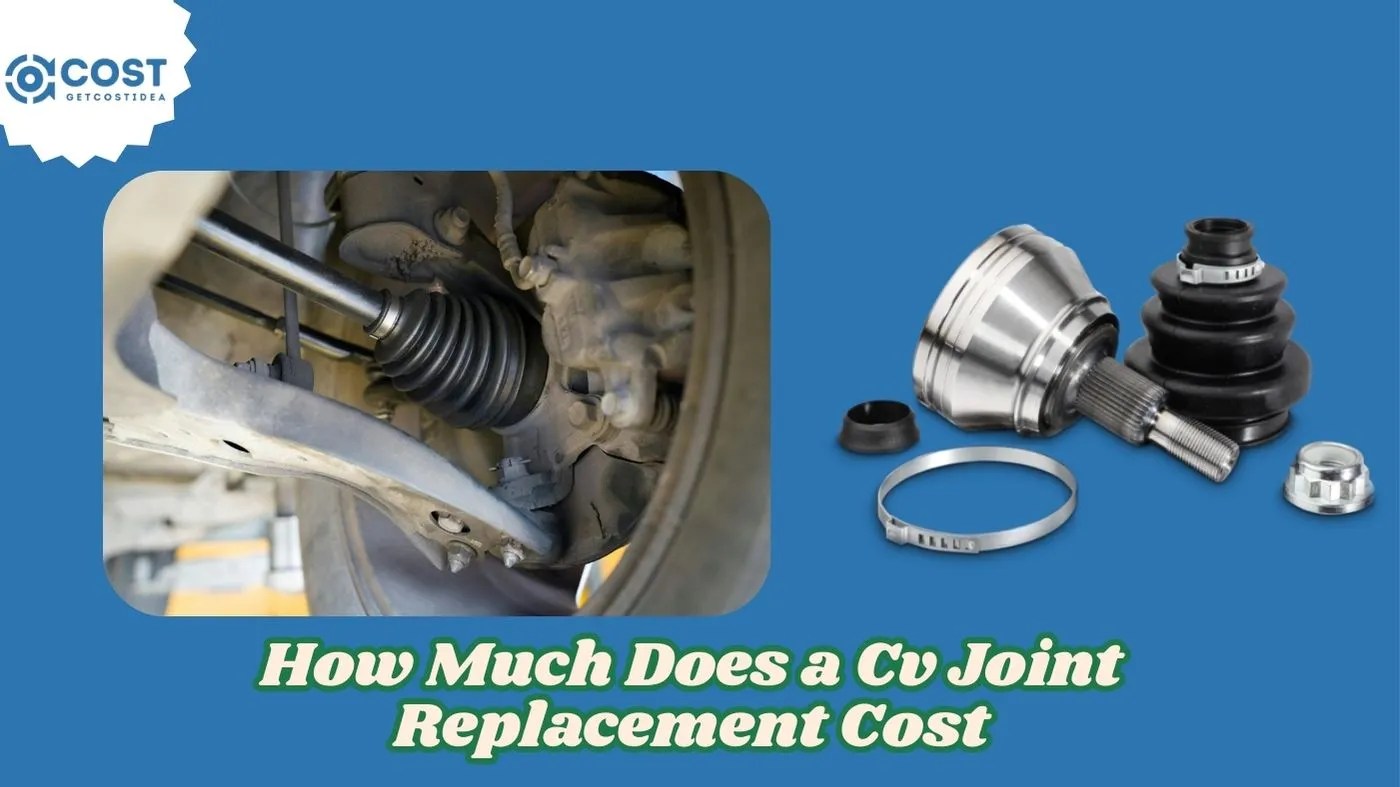
Whether you are driving a traditional front-wheel-drive sedan or a modern high-torque Electric Vehicle (EV), the CV joints are under constant stress. These joints are encased in a grease-filled rubber boot that protects the internal bearings from dirt and moisture.
In the current automotive landscape, all-wheel-drive (AWD) systems have become standard in many crossovers and SUVs, meaning your vehicle likely has four CV axles instead of two. Understanding the warning signs can save you thousands in secondary repairs to the transmission or differential.
6 Common Signs of a Bad CV Joint
Identifying a failing CV joint early is the best way to avoid being stranded on the side of the road. Here are the most frequent symptoms reported by technicians in 2026.
1. Loud Clicking or Popping Noises During Turns
The most iconic symptom of a failing outer CV joint is a rhythmic clicking or popping sound when you turn the steering wheel. This noise typically becomes louder and faster as you accelerate through the turn. This happens because the worn-out bearings lose their ability to move smoothly under the increased pressure of a sharp angle.
2. Intense Vibrations During Acceleration
If you feel a shudder or vibration that intensifies as you speed up on a straight road, the inner CV joint is likely the culprit. Unlike the outer joint, the inner joint handles the vertical movement of the suspension. When it wears down, it creates an imbalance in the drivetrain, leading to a “wobble” sensation that can be felt through the floorboards or the steering wheel.
3. Grease on the Inside of the Wheels or Tires
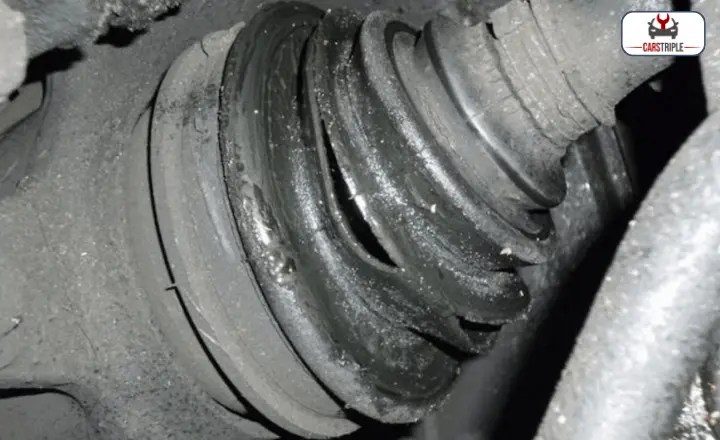
The CV joint is packed with a special high-temperature grease. If the CV boot (the protective rubber sleeve) cracks or tears, centrifugal force will sling that grease out onto the inside of the rim, the tire, or the brake components. If you spot dark, thick grease in these areas, your joint is now exposed to road debris and will fail rapidly.
4. Bouncing or Instability While Driving
A severely worn CV joint can mimic the symptoms of bad shocks or struts. Because the joint can no longer provide a smooth transfer of power, the axle may “bind” and release, causing a bouncing sensation even on flat pavement. This significantly reduces your traction and safety during emergency maneuvers.
5. Clunking Sound When Shifting Gears
Do you hear a heavy “clunk” when shifting from Drive to Reverse? This often indicates excessive “play” or slack in the CV joint’s internal tracks. As the gears engage, the axle snaps into place rather than transitioning smoothly, which puts unnecessary strain on the transmission.
6. Vehicle Refuses to Move
This is the final stage of failure. If the CV joint completely snaps, the axle will spin freely without sending power to the wheels. In many front-wheel-drive vehicles, a single broken CV joint will prevent the car from moving at all, as the differential sends all power to the broken (easiest to spin) side.
Inner vs. Outer CV Joints: What’s the Difference?
It is important to distinguish which joint is failing to provide your mechanic with the right information. Outer CV joints are located near the wheel hubs and are responsible for steering angles; they are the most common point of failure.
Inner CV joints are located closer to the transmission. While they fail less frequently, their symptoms are often more subtle, typically manifesting as vibrations during straight-line acceleration rather than noise during turns. In 2026, many technicians recommend replacing the entire CV axle assembly rather than just one joint, as it is often more cost-effective regarding labor.
2026 CV Joint Replacement Cost Breakdown
Repair costs have shifted slightly in 2026 due to changes in labor rates and the complexity of modern electronic drivetrains. On average, you can expect to pay between $250 and $650 per axle.
Parts Costs
The price of a new CV axle assembly generally ranges from $100 to $250. High-performance vehicles, heavy-duty trucks, or luxury EVs may see part prices climb toward $400. Using OEM (Original Equipment Manufacturer) parts is highly recommended to ensure the longevity of the repair.
Labor Costs
Labor is the most variable factor, usually ranging from $150 to $400. A standard CV axle replacement takes a skilled mechanic about 1.5 to 3 hours. If your vehicle has a complex multi-link suspension or integrated electronic sensors, the labor time may increase.
Total Estimated Costs by Vehicle Type:
- Economy Sedans: $250 – $400
- SUVs and Light Trucks: $350 – $550
- Luxury and Electric Vehicles: $500 – $850+
Factors That Influence Your Final Bill
Several factors can push your repair bill higher or lower. Your geographic location plays a huge role, as shop labor rates in major metropolitan areas are significantly higher than in rural regions.
Additionally, the make and model of your vehicle dictate the accessibility of the axle. Some vehicles require the removal of the subframe or specialized tools to pop the axle out of the transmission, which adds to the total labor hours.
Can You Drive With a Bad CV Joint?
While your car might still be mobile with a clicking CV joint, it is a major safety risk. A total failure at highway speeds can cause the axle to swing violently, damaging the brake lines, suspension components, and even the transmission casing.
If you notice grease leaking or hear that distinct clicking sound, schedule an inspection immediately. Catching a torn CV boot early can often result in a simple boot replacement (approx. $150) rather than a full axle replacement.
Conclusion
A bad CV joint is more than just an annoying noise; it is a warning that your vehicle’s drivetrain is compromised. By staying vigilant for vibrations, grease leaks, and clicking sounds, you can address the issue before it leads to a total mechanical breakdown.
In 2026, keeping your vehicle in peak condition requires proactive maintenance. If you suspect your CV joints are wearing out, consult a certified technician to get an accurate quote and ensure your vehicle remains safe for the road ahead.