
If you are a Nissan Livina owner, you know that this vehicle is a workhorse designed for efficiency and comfort. However, encountering a Nissan Livina engine misfire at high RPM can be a frustrating experience. Whether you are merging onto a highway or overtaking on an incline, the last thing you want is a stuttering engine.
As we navigate through 2026, keeping your vehicle in peak condition is essential for both safety and longevity. In this guide, we will break down why your Livina struggles at high speeds and how you can resolve these performance bottlenecks effectively.
Understanding the High-Compression Dynamics of the Livina
The Nissan Livina, particularly the Grand Livina series, is engineered with a high compression ratio of 10.5:1. This design is intended to maximize power output from a relatively compact engine. However, this technical specification makes the engine sensitive to fuel quality and combustion stability.
When you push the engine to high RPMs, the demand for precise ignition timing and consistent fuel delivery increases exponentially. If the engine cannot maintain this, you will experience a misfire. In many cases, the root cause is engine knocking caused by using fuel with an octane rating lower than what the engine requires.
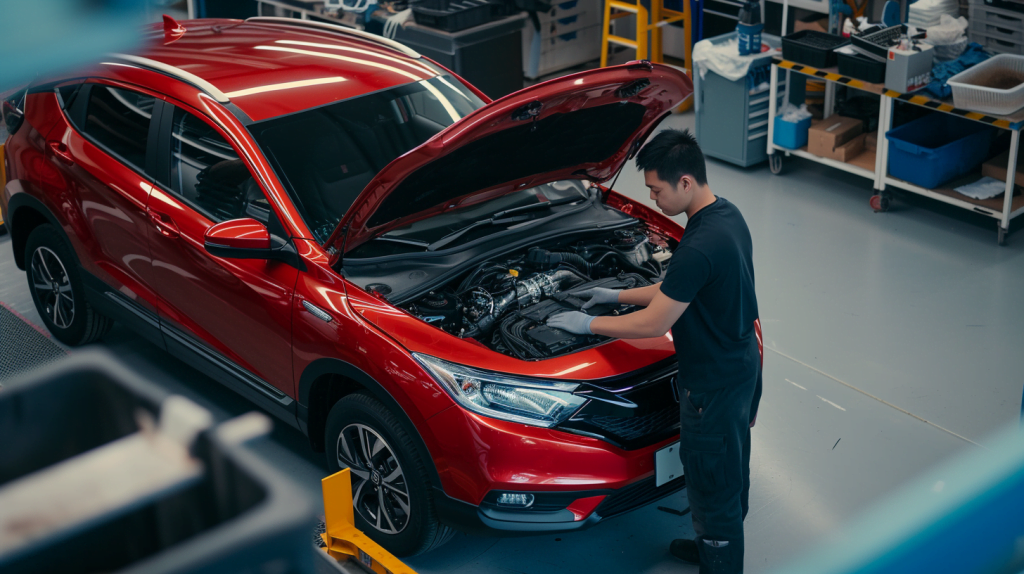
Why Does Your Engine Misfire at High RPM?
A misfire at high speed is distinct from a rough idle. It indicates that the engine is failing to complete the combustion cycle under load. Here are the primary culprits:
1. Faulty Ignition System
The ignition coils and spark plugs are the most common points of failure. At high RPMs, the ignition system must fire hundreds of times per second. If your spark plugs are worn or your ignition coils are failing, the spark may “blow out” under the increased cylinder pressure, leading to a noticeable power loss.
2. Fuel Delivery Issues
As the engine spins faster, it requires a significantly higher volume of fuel. A clogged fuel filter or a failing fuel pump might provide enough pressure for city driving but fail to keep up with the demand at 4,000+ RPM. This results in a “lean” condition, where there isn’t enough fuel to support the high-speed combustion.
3. Timing and Sensor Malfunctions
Your engine relies on the camshaft and crankshaft position sensors to synchronize ignition timing. If these sensors are sending erratic signals—or if your timing chain has stretched over the years—the ignition timing will be off. Even a millisecond of deviation at high RPM can trigger a misfire.

Step-by-Step Troubleshooting for 2026 Livina Owners
If you are dealing with a misfire, follow this systematic approach to identify the source of the problem before spending money on unnecessary repairs.
- Check for Diagnostic Trouble Codes (DTCs): Use an OBD-II scanner to identify specific cylinder misfire codes (e.g., P0300 for random misfire, or P0301-P0304 for specific cylinders).
- Inspect Spark Plugs and Coils: Remove the ignition coils and inspect the spark plugs for carbon buildup or electrode erosion. If the spark plug gap is too wide, it will struggle at high RPM.
- Perform a Fuel Pressure Test: Ensure your fuel pump is delivering the factory-specified pressure under load.
- Verify Fuel Quality: Ensure you are using the correct octane rating. Given the 10.5:1 compression ratio, using low-octane fuel will cause the ECU to pull timing, leading to performance degradation.
- Clean the Air Intake System: A dirty air filter or a contaminated Mass Air Flow (MAF) sensor can cause incorrect air-fuel ratio calculations at high speeds.
Preventive Maintenance Tips
To prevent a recurring Nissan Livina engine misfire at high RPM, adhere to these maintenance best practices:
- Use High-Quality Fuel: Always stick to the manufacturer’s recommended octane rating to prevent pre-ignition and knocking.
- Regular Ignition Service: Replace spark plugs at the recommended intervals (typically every 40,000 to 60,000 km depending on plug type).
- Keep Sensors Clean: Cleaning your MAF and throttle body annually can prevent a host of performance issues.
- Monitor Timing Components: If you notice a rattling sound at startup, have your timing chain tensioner inspected by a professional mechanic.
Conclusion
A Nissan Livina engine misfire at high RPM is rarely a “mystery” problem. It is usually the result of the engine struggling to meet the demands of high-speed performance due to wear and tear or incorrect fuel usage. By focusing on the ignition system, fuel delivery, and sensor accuracy, you can restore your vehicle to its smooth, reliable state.
If your check engine light is flashing, do not ignore it. Addressing these issues early prevents long-term damage to your catalytic converter and engine internals. Keep your Livina running perfectly through 2026 and beyond by staying proactive with your maintenance.