
As we navigate the highways of 2026, the convergence of aerospace technology and automotive engineering has reached a critical turning point. The integration of ASIL-grade Global Navigation Satellite Systems (GNSS) components into vehicle architectures is no longer a futuristic concept—it is the backbone of modern Functional Safety (FuSa). But why is the “ASIL” (Automotive Safety Integrity Level) designation so vital for satellite-linked navigation and communication systems, and how does it prevent the catastrophic failures of tomorrow? This article explores the Impact of “ASIL-Grade” satellite components on road safety.
Understanding the ASIL Mandate in 2026
At its core, the ISO 26262 standard defines the safety requirements for electrical and electronic systems in road vehicles. Through meticulous hazard analysis and risk assessment, and by assigning an ASIL rating—ranging from A (lowest) to D (highest)—manufacturers determine the level of risk reduction required to prevent hazardous events.
When GNSS-based precise positioning systems are elevated to ASIL-grade status, it means the data they provide for ADAS (Advanced Driver Assistance Systems) and emerging autonomous driving systems is backed by rigorous hardware and software reliability. In 2026, we are seeing a shift where satellite data is no longer just “nice-to-have” for GPS; it is a safety-critical input that dictates whether a vehicle performs an emergency maneuver. This fundamental change highlights the significant Impact of “ASIL-Grade” satellite components on road safety.
Bridging the Gap: V2X, ADAS, and Satellite Reliability
The integration of Vehicle-to-Everything (V2X) communication, relying heavily on real-time data processing, is the most significant leap in road safety this year. However, not all V2X receivers are created equal. The Impact of “ASIL-Grade” satellite components on road safety is particularly evident in V2X systems.
ASIL-Grade Reliability: An ASIL-compliant V2X receiver, often part of a broader sensor fusion architecture, ensures that data processing is accurate enough to initiate automatic emergency braking (AEB). Without this certification, and the implementation of redundant systems, a receiver might suffer from latency or packet loss, making it unsuitable for life-critical automated decisions.
Pre-emptive Safety: Even if a system isn’t fully autonomous, non-ASIL components can still contribute by tightening seatbelts or priming braking fluid pressure. However, the industry standard for 2026 is moving toward full ASIL-D certification for all navigation-linked safety components, crucial for advancing through the various SAE levels of automation and eliminating “blind spots” in decision logic.
ISO 26262 vs. ASPICE: A Synergistic Approach
To achieve a high-safety rating, manufacturers must balance ISO 26262 (Functional Safety) with ASPICE (Automotive Software Process Improvement and Capability Determination). While ISO 26262 focuses on the what—ensuring the hardware doesn’t fail—ASPICE focuses on the how—ensuring the software development process is robust.
In 2026, the most successful autonomous platforms are those that bridge these standards. By ensuring that satellite-derived positional data is managed through an ASPICE-compliant software lifecycle, and fortified against vulnerabilities through robust automotive cybersecurity measures, companies guarantee that the code running those satellite sensors is free from systematic errors that could otherwise lead to a collision.
The Evolution of Communication: IEEE 802.11p vs. LTE-V2X
A common debate in 2026 remains the choice of communication protocol for safety-critical satellite-linked applications. While LTE-V2X (and its 5G-enabled iterations) offers superior range and data throughput, IEEE 802.11p remains the gold standard for low-latency, mission-critical safety applications.
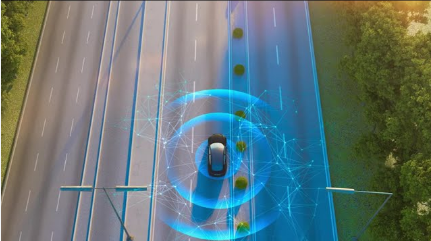
Many manufacturers are now using a hybrid communication architecture. They utilize satellite data for high-level path planning and precise positioning, while IEEE 802.11p handles the instantaneous, “life-or-death” communication between vehicles. This combination ensures that even in degraded network conditions, the vehicle remains within its safety-critical objective defined by its ASIL rating.
Why ASIL-Grade Matters for the Future
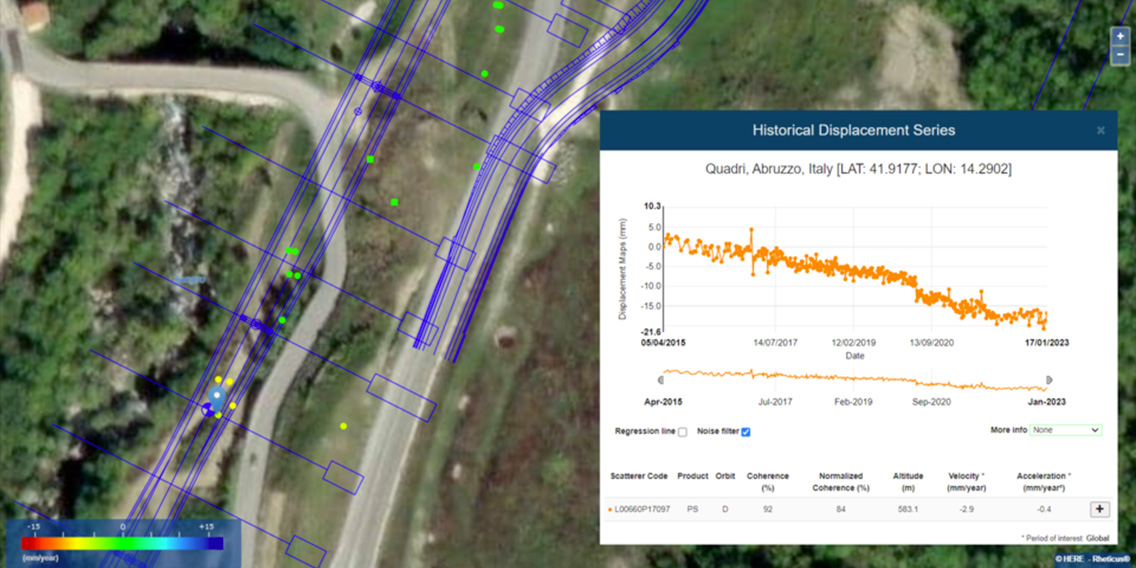
The impact of these components extends beyond just the car itself. By utilizing satellite-linked infrastructure monitoring, cities can now detect road surface degradation in real-time and feed this data directly into the vehicle’s onboard computer, enabling rapid, real-time data processing for immediate action.
If a vehicle knows—with ASIL-level certainty—that the road ahead is compromised due to a satellite-detected sinkhole or icy patch, it can automatically adjust its speed and trajectory. This proactive approach is the defining factor for the safety and reliability of advanced autonomous driving systems in 2026. It is no longer about reacting to accidents; it is about using high-integrity satellite data to prevent them before they manifest, directly showcasing the profound Impact of “ASIL-Grade” satellite components on road safety.
Conclusion: The Path Toward Zero Fatalities
As we look toward the remainder of the decade, the requirement for ASIL-grade satellite components will likely become the global regulatory norm rather than a premium feature. By adhering to the strict technical safety objectives of ISO 26262, the automotive industry is building a safer, more predictable environment for all road users. This commitment underscores the critical Impact of “ASIL-Grade” satellite components on road safety.
The transition to high-integrity, satellite-informed driving is not just an engineering milestone; it is a fundamental shift in how we protect human life on the road. As these technologies mature, the goal of “Vision Zero” becomes increasingly attainable, proving that when aerospace precision meets automotive safety, the result is a safer world for everyone.