
The automotive industry is undergoing a seismic shift in 2026. As vehicles become increasingly connected to low-earth orbit (LEO) satellite constellations, the ability to process massive streams of telemetry data in real-time has become the new gold standard for maintenance. Enter Gemini 3.1 Flash, Google’s high-performance, low-latency AI model, which is revolutionizing how we approach satellite-driven car diagnostics and comprehensive vehicle health monitoring. This guide will detail How to use Gemini 3.1 Flash for satellite-driven car diagnostics effectively.
By leveraging the speed of Gemini 3.1 Flash, automotive engineers and fleet managers can now identify mechanical irregularities, enabling robust preventative maintenance and superior fleet optimization, before they lead to breakdowns. This guide explores How to use Gemini 3.1 Flash for satellite-driven car diagnostics and integrate this multimodal powerhouse into your diagnostic workflows to ensure your fleet remains operational and efficient.
Why Gemini 3.1 Flash is the Future of Vehicle Telemetry
In the past, diagnostic tools were limited to local sensors and periodic data uploads. Today, satellite connectivity provides a constant stream of high-fidelity data, making advanced remote diagnostics a reality. Gemini 3.1 Flash is uniquely suited for this task because it is optimized for low-latency environments and high-volume traffic.
Unlike heavier models, the Flash architecture allows for rapid inference, meaning your diagnostic software can interpret satellite-fed engine heat maps, vibration patterns, and fluid pressure data in milliseconds, leveraging sophisticated sensor data fusion and machine learning algorithms. This real-time dialogue with vehicle systems ensures that if a sensor detects an anomaly, the diagnostic feedback is processed instantly, even in remote locations where cellular coverage is non-existent.
Setting Up Your Diagnostic Pipeline
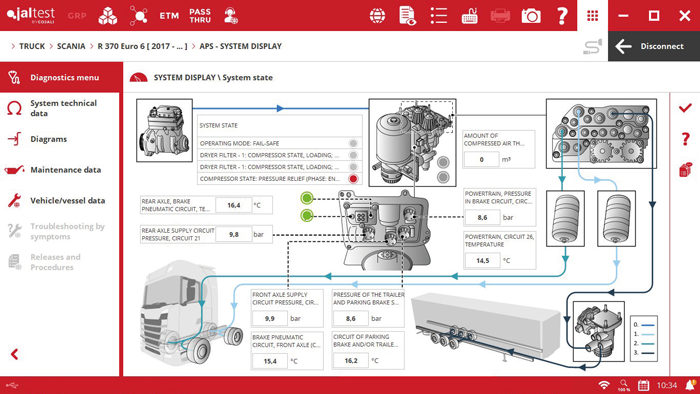
To begin learning How to use Gemini 3.1 Flash for satellite-driven car diagnostics, you must first establish a robust data pipeline that connects your vehicle’s On-Board Diagnostics (OBD-II) port to a satellite uplink terminal, capturing critical vehicle performance data. Once the data reaches your cloud environment, follow these steps:
- Data Normalization: Use your satellite gateway to convert proprietary vehicle telemetry into a structured format (JSON or Protobuf) that Gemini can parse.
- API Integration: Access the Gemini API through Google AI Studio or Vertex AI. For high-volume fleet diagnostics, Gemini 3.1 Flash-Lite is recommended to keep operational costs low while maintaining high-quality diagnostic precision.
- Prompt Engineering for Diagnostics: Feed the model a structured prompt including the vehicle’s make, model, current satellite-reported diagnostic trouble codes (DTCs), and historical performance data.
- Multimodal Analysis: Upload visual data from internal diagnostic cameras or acoustic patterns of the engine to utilize the model’s multimodal awareness.
Leveraging Acoustic Nuance and Numeric Precision
One of the most impressive features of Gemini 3.1 Flash is its acoustic nuance detection. This capability is central to understanding How to use Gemini 3.1 Flash for satellite-driven car diagnostics effectively in 2026, as satellite-driven diagnostics are no longer limited to binary error codes. By transmitting audio samples of engine performance via satellite, Gemini 3.1 Flash can identify subtle “knocking” or “whirring” sounds that signify impending component failure, enabling true proactive maintenance.
Furthermore, the model’s enhanced numeric precision allows it to correlate these sounds with specific changes in fuel pressure or electrical load. This combination of audio and numeric analysis creates a “digital twin” of the vehicle’s health, allowing for predictive maintenance that prevents expensive repairs down the line.
Cost-Efficiency and Scalability with Flash-Lite
For large-scale fleet management, cost-sensitive traffic is a major concern. The Gemini 3.1 Flash-Lite variant is the industry leader in 2026 for high-volume LLM traffic. By offloading routine status checks to Flash-Lite and reserving the more robust Gemini 3.1 Pro for complex, multi-vehicle diagnostic simulations, you can optimize your cloud spend without sacrificing reliability.
Real-time monitoring: Use Flash for instant alerts on critical failures.
Batch processing: Use Flash-Lite for end-of-day fleet health reports.
Predictive modeling: Use Pro for deep-dive analysis of recurring mechanical trends.
Best Practices for 2026 Diagnostic Workflows
To maximize the effectiveness of your satellite-driven diagnostic system, follow these professional tips:
Implement Edge Pre-processing: Do not send raw, uncompressed telemetry to the cloud. Use edge computing to filter out noise, ensuring the AI only processes meaningful changes in vehicle state.
Maintain Contextual Memory: Ensure your API calls include a rolling history of the vehicle’s last 500 miles. Gemini performs significantly better when it understands the recent “context” of a car’s journey.
Security First: Since satellite transmissions are inherently public, robust automotive cybersecurity measures are paramount. Ensure all telemetry data is encrypted using end-to-end protocols before it hits the Gemini API endpoints.
Conclusion: The Path Forward
The integration of satellite-driven car diagnostics with Gemini 3.1 Flash, and understanding How to use Gemini 3.1 Flash for satellite-driven car diagnostics effectively, is more than just a technological upgrade; it is a fundamental change in how we perceive vehicle reliability. By reducing latency and increasing the depth of analysis, we are moving toward a future where “breakdowns” become a thing of the past.
Whether you are a developer building a new diagnostic platform or a fleet manager looking to modernize your operations, the tools available in the Gemini 3.1 ecosystem provide the precision and speed necessary to dominate the automotive landscape in 2026. Start your integration today and leverage the power of the cloud, even from the most remote reaches of the planet.