
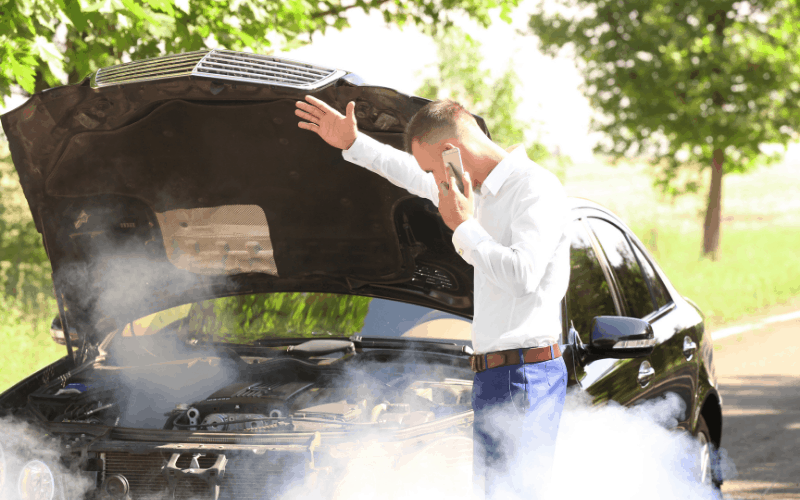
Imagine you are cruising down the highway, enjoying the seamless performance of your vehicle, when suddenly a bright red warning light flashes on your digital cockpit. The engine temperature gauge is climbing rapidly into the “H” zone, and you might even see a faint wisp of steam escaping from the hood.
In 2026, even with advanced AI-driven diagnostics and hybrid cooling systems, car overheating remains a critical issue that can lead to catastrophic engine failure if not handled correctly. Knowing exactly how to fix car overheating while driving can save you thousands of dollars in repair bills and ensure your safety on the road.
Immediate Steps: What to Do the Moment Your Car Overheats
If you notice your temperature rising while you are in motion, do not panic. Your immediate actions will determine whether you face a simple coolant top-off or a complete engine replacement.
1. Turn Off the Air Conditioning Immediately
The AC system puts a massive load on your engine. By turning it off, you reduce the strain on the cooling system. If your car is struggling, this is the first step to lowering the internal temperature.
2. Crank Up the Heater
It sounds counterintuitive, especially in the summer, but turning your heater to the maximum setting can save your engine. The heater core acts like a secondary radiator, drawing heat away from the engine block and blowing it into the cabin. It might be uncomfortable for you, but it’s a lifesaver for your vehicle.
3. Shift to Neutral and Rev Gently (If Stopped in Traffic)
If you are stuck in gridlock, shift into neutral or park and lightly rev the engine. This increases the speed of the water pump and the radiator fan, which helps circulate coolant and air more efficiently through the system.
Why Is My Car Overheating? Common Causes in 2026
Even in the most modern 2026 models, mechanical and electrical failures can occur. Understanding the “why” is the first step toward the “how.”
- Low Coolant Levels: This is the most common culprit. A leak in the radiator hose, water pump, or the radiator itself can cause the system to lose its ability to regulate heat.
- Failed Thermostat: If the thermostat gets stuck in the closed position, coolant cannot flow from the engine to the radiator to be cooled.
- Cooling Fan Malfunction: Modern cars rely on electric fans. If a fuse blows or the motor fails, air won’t move through the radiator fins when you are driving at low speeds.
- Broken Serpentine Belt: In many internal combustion engines, the belt drives the water pump. If the belt snaps, the coolant circulation stops instantly.
- Air Bubbles in the System: Sometimes, air gets trapped in the cooling lines, creating a “lock” that prevents the liquid from moving.
How to Safely Inspect and Fix the Problem Roadside
Once you have safely pulled over to the shoulder or a parking lot, follow these steps. Safety Warning: Never, under any circumstances, open the radiator cap while the engine is hot. The pressurized steam can cause severe third-degree burns.
Step 1: Let the Engine Cool Down
You must wait at least 30 to 45 minutes for the pressure to subside. Use this time to check your vehicle’s digital health report if your car is equipped with 2026 smart diagnostics.
Step 2: Inspect for Visible Leaks
Look under the car for puddles of bright green, orange, or pink fluid. Check the radiator hoses for cracks, bulges, or hissing sounds. If a hose has popped off, you might be able to reattach it with a screwdriver.
Step 3: Top Off the Coolant Reservoir
Check the translucent coolant expansion tank. If it is below the “Full” line, add a 50/50 mix of antifreeze and distilled water. If you are in an emergency and don’t have coolant, plain water can work as a temporary fix to get you to the nearest service station.
Step 4: Restart and Monitor
After adding fluid, start the engine. Watch the gauge closely. If the temperature stays stable, you may have a slow leak that requires professional attention soon. If it spikes immediately, you likely have a failed water pump or a blown head gasket.
Troubleshooting Advanced Issues: Beyond the Basics
If the coolant levels are fine but the car is still overheating, you need to dig deeper into the troubleshooting process.
Checking the Radiator Fan
With the engine running (and the AC on), look at the front of the engine bay. The electric fans should be spinning rapidly. If they are stationary, you may have a blown relay or a faulty sensor.
Inspecting the Oil
Pull the oil dipstick. If the oil looks like a “chocolate milkshake,” you have a blown head gasket. This occurs when coolant leaks into the engine oil passages. This is a major repair that requires immediate professional intervention.
The 2026 Context: Electric Vehicles (EVs) and Overheating
While this guide focuses on internal combustion engines, it is important to note that EVs can also overheat. In 2026, high-performance batteries and motors use liquid cooling systems similar to gas cars.
If an EV warns of overheating, it is usually related to the Thermal Management System. Pull over and allow the battery to cool down. Do not attempt to fast-charge an overheating EV, as this can cause permanent cell degradation.
Proactive Prevention: How to Avoid Overheating
The best way to fix an overheating problem is to prevent it from happening in the first place.
- Flush the Cooling System: Every 30,000 to 50,000 miles, have your coolant flushed to remove scale and rust buildup.
- Monitor Your Dashboard: Don’t ignore “Low Coolant” or “Check Engine” lights. Modern sensors are highly sensitive and often detect a problem before the steam starts rising.
- Inspect Hoses Annually: Rubber degrades over time. Ensure your hoses are firm but flexible, with no signs of “crunchiness” or leaking at the clamps.
- Keep the Radiator Clean: Ensure that leaves, dirt, and road debris aren’t blocking the airflow through the radiator fins at the front of your vehicle.
Conclusion
Dealing with a car overheating while driving is a high-stress situation, but by staying calm and following the right steps, you can prevent permanent damage. Remember to turn off the AC, turn on the heat, and pull over safely.
Whether you are driving a vintage 2010 sedan or a cutting-edge 2026 hybrid, the principles of thermal management remain the same. Keep your fluids topped off, listen to your vehicle’s warnings, and always prioritize safety over reaching your destination on time.