
If you drive a Honda HR-V, you likely appreciate its blend of practicality, fuel efficiency, and smooth handling. However, encountering a Honda HR-V CVT overheating warning can be an alarming experience for any driver. As we navigate 2026, understanding how your vehicle’s Continuously Variable Transmission (CVT) and cooling systems interact is crucial for maintaining vehicle longevity and safety.
Whether you are a long-time owner or recently purchased a 2025/2026 model, this guide will walk you through identifying, addressing, and preventing transmission and engine temperature issues.
Understanding the Honda HR-V CVT Overheating Warning
Modern vehicles are equipped with sophisticated sensor arrays designed to protect your powertrain. When your dashboard lights up with a warning, it is the car’s way of saying it has reached a critical thermal limit.

The Difference Between Engine and Transmission Heat
It is vital to distinguish between a standard engine cooling system failure and a CVT transmission overheat. While both may trigger a “Check Engine” or temperature warning light, the causes are distinct:
- Engine Overheating: Typically related to coolant levels, thermostat failure, or a radiator malfunction.
- CVT Overheating: Often stems from excessive friction, degraded transmission fluid, or aggressive driving habits in stop-and-go traffic.

Immediate Steps When Your HR-V Overheats
If you see a temperature gauge spike or a warning light flash, do not panic. Follow these safety protocols to protect yourself and your vehicle:
- Pull Over Safely: Find a flat, safe location off the road. Turn off the engine immediately to stop the heat generation process.
- Wait for Cooling: Per the 2025/2026 Honda Owner’s Manual, never attempt to open the hood if you see steam or smoke. Steam and spray from an overheated engine can cause serious, life-altering scalds.
- Do Not Remove the Radiator Cap: Even if the engine feels like it is cooling down, the pressure inside the system remains dangerous. Always wait for the engine and radiator to be cool to the touch before attempting any inspection.
- Emergency Measures: If you identify a coolant leak, use water only as a temporary emergency measure to get to a service station. Contact a certified Honda dealer immediately for professional repairs.
Why Do Honda HR-V CVTs Overheat?
While the HR-V is reliable, historical data shows that transmission fluid health is the “lifeblood” of the CVT. In previous years, Honda issued recalls regarding transmission fluid degradation, which highlighted how critical fluid viscosity is to preventing overheating.
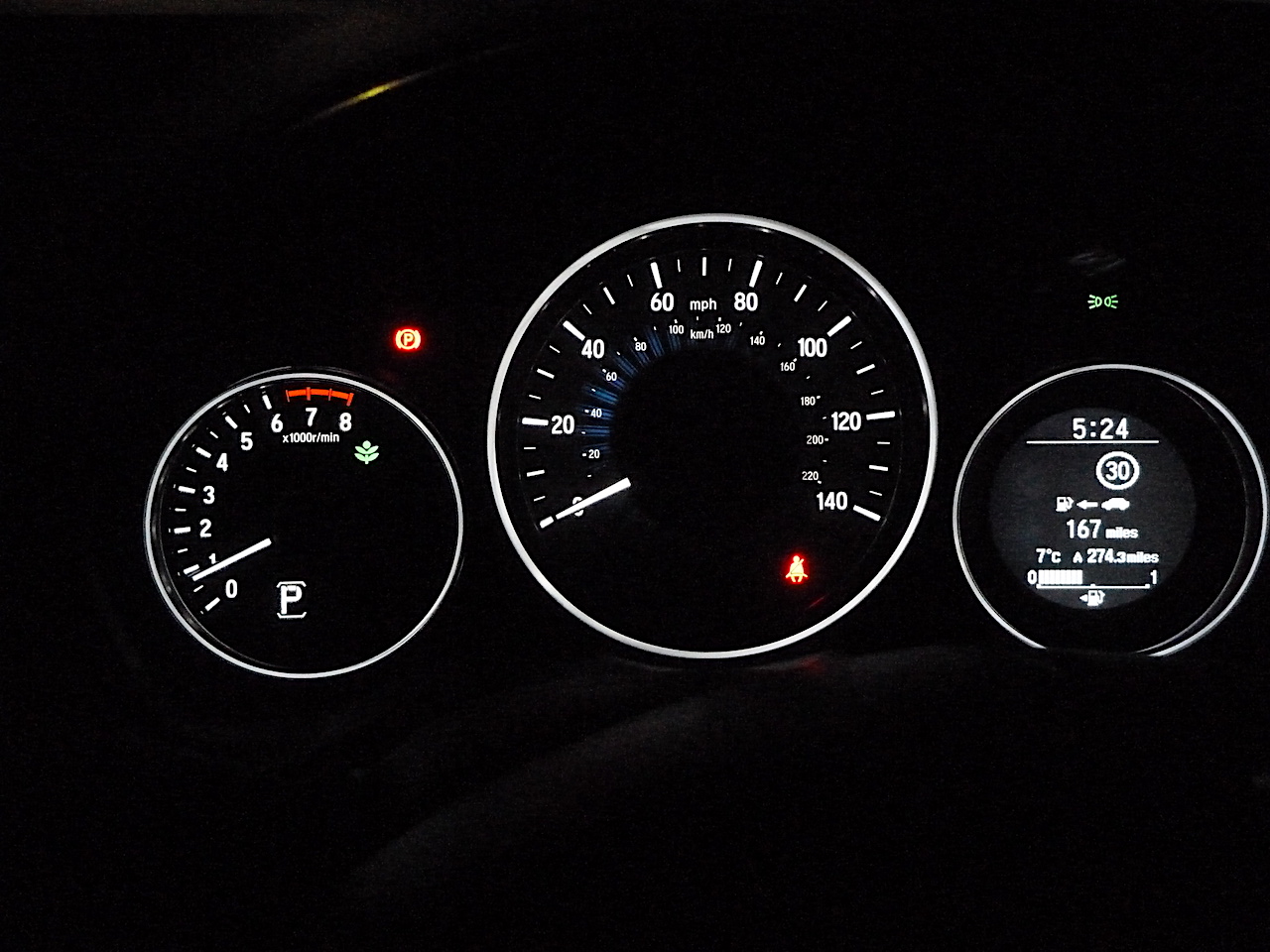
Common Culprits in 2026
- Fluid Degradation: CVT fluid breaks down under intense heat. If it isn’t changed according to the maintenance schedule, it loses its ability to lubricate and cool the transmission pulleys.
- Heavy Loads: Towing beyond the vehicle’s limits or carrying excessive weight can put immense strain on the CVT, forcing the fluid temperature to rise rapidly.
- Aggressive Driving: Frequent hard acceleration and high-speed driving in hot climates can push the transmission beyond its designed thermal threshold.
Maintenance Tips to Prevent Overheating
Proactive maintenance is the best defense against a Honda HR-V CVT overheating warning. By following these steps, you can significantly extend the life of your transmission:
- Stick to the Maintenance Minder: Your Honda’s onboard computer tracks oil and fluid life. Never ignore the prompt to service your transmission fluid.
- Use Genuine Honda Fluid: CVTs are highly sensitive to fluid properties. Always insist on Genuine Honda CVT Fluid at your dealership or trusted mechanic.
- Cooling System Checks: Regularly inspect your radiator for debris, such as leaves or road grime, which can block airflow and lead to engine-side overheating.
- Monitor Driving Habits: If you live in a particularly hot climate, allow your vehicle a moment to “warm up” before hitting high speeds and avoid aggressive maneuvers during extreme heat waves.
When to See a Professional
If your dashboard warning light persists even after the car has cooled down, or if you notice “shuddering” while accelerating, this is a sign of internal transmission damage. Do not attempt to “drive through” the issue.
A professional diagnostic scan can reveal if the issue is a simple sensor malfunction or a more complex mechanical problem. Remember, ignoring a CVT overheating warning can lead to complete transmission failure, which is significantly more expensive to repair than a simple fluid change or sensor replacement.
Conclusion
The Honda HR-V remains one of the most popular compact SUVs on the market for a reason. By staying informed about the signs of overheating and adhering to the maintenance guidelines provided in your 2026 owner’s manual, you can enjoy years of trouble-free driving.
Always prioritize safety by allowing the engine to cool before inspection, and never hesitate to reach out to a certified Honda technician if you suspect a recurring thermal issue. Your diligence today ensures your HR-V stays on the road for years to come.