
The Honda Civic has long been the gold standard for blending reliability with a spirited driving experience. However, as we move into 2026, many owners of the 1.5L VTEC Turbo models—spanning from the 10th generation to the latest releases—continue to report a frustrating “hesitation” when hitting the gas.
If you’ve ever felt that agonizing one-second delay between flooring the pedal and the car actually moving, you are dealing with the notorious Honda Civic turbo lag problem. While some of this is inherent to small-displacement turbocharged engines, much of it can be corrected with the right combination of maintenance, software tweaks, and hardware upgrades.
In this comprehensive guide, we will break down the most effective ways to fix turbo lag in your Honda Civic, ensuring your 2026 driving experience is as responsive as possible.
Understanding the “Delay”: Is it Turbo Lag or Something Else?
Before diving into the fixes, it is crucial to distinguish between actual turbo lag and CVT transmission hesitation. Turbo lag is the time required for the exhaust gases to spin the turbine fast enough to create boost.
On the other hand, many Honda Civics utilize a Continuously Variable Transmission (CVT). In 2026, while Honda’s “G-Design Shift” logic has improved, CVTs can still feel “rubbery,” making the driver think the turbo is lagging when it’s actually the transmission searching for the optimal ratio.
<img alt="How to Fix Turbo Lag | It Still Runs | Your Ultimate Older Auto Resource" src="http://cpi.studiod.com/wwwehowcom/i.ehow.com/images/a07/pg/02/fix-turbo-lag-800×800.jpg” style=”max-width:100%; height:auto; border-radius:8px; margin: 1rem 0;” />
Top Causes of Honda Civic Turbo Lag in 2026
If your Civic feels more sluggish than usual, several factors could be at play. Identifying the root cause is the first step toward a permanent Honda Civic turbo lag problem fix.
1. Boost Leaks and Loose Couplers
The turbocharged system relies on pressurized air. If there is even a tiny pinhole leak in a rubber hose or a loose clamp on the intercooler piping, your turbo has to work twice as hard to build pressure. This manifests as a significant delay in power delivery.
2. Carbon Buildup on Intake Valves
As a Direct Injection (DI) engine, the Civic’s 1.5T is prone to carbon deposits on the intake valves. By 2026, many high-mileage 10th and 11th Gen Civics are hitting the point where this buildup restricts airflow, causing sluggish acceleration and increased lag.
3. Outdated ECU Calibration
Honda frequently releases software updates for the Engine Control Unit (ECU). These updates often refine the electronic wastegate control, which manages how quickly the turbo spools. If your car hasn’t seen a dealership for a software scan recently, you might be running on inefficient, older code.
The Most Effective Hardware Fixes for Turbo Lag
For those looking to go beyond factory performance, hardware modifications are the most direct way to reduce spool time.
High-Flow Downpipes
The stock downpipe on the Honda Civic is highly restrictive to meet strict 2026 emission standards. By replacing it with a high-flow downpipe, you allow exhaust gases to exit the engine faster. This reduces backpressure, allowing the turbocharger to spin up (spool) much earlier in the RPM range.
Upgraded Intercoolers
Heat is the enemy of boost. The stock Civic intercooler is known to “heat soak” quickly, especially in stop-and-go traffic. A larger, more efficient aftermarket intercooler keeps intake temperatures low, ensuring the air is dense and the throttle response remains crisp even on hot summer days.
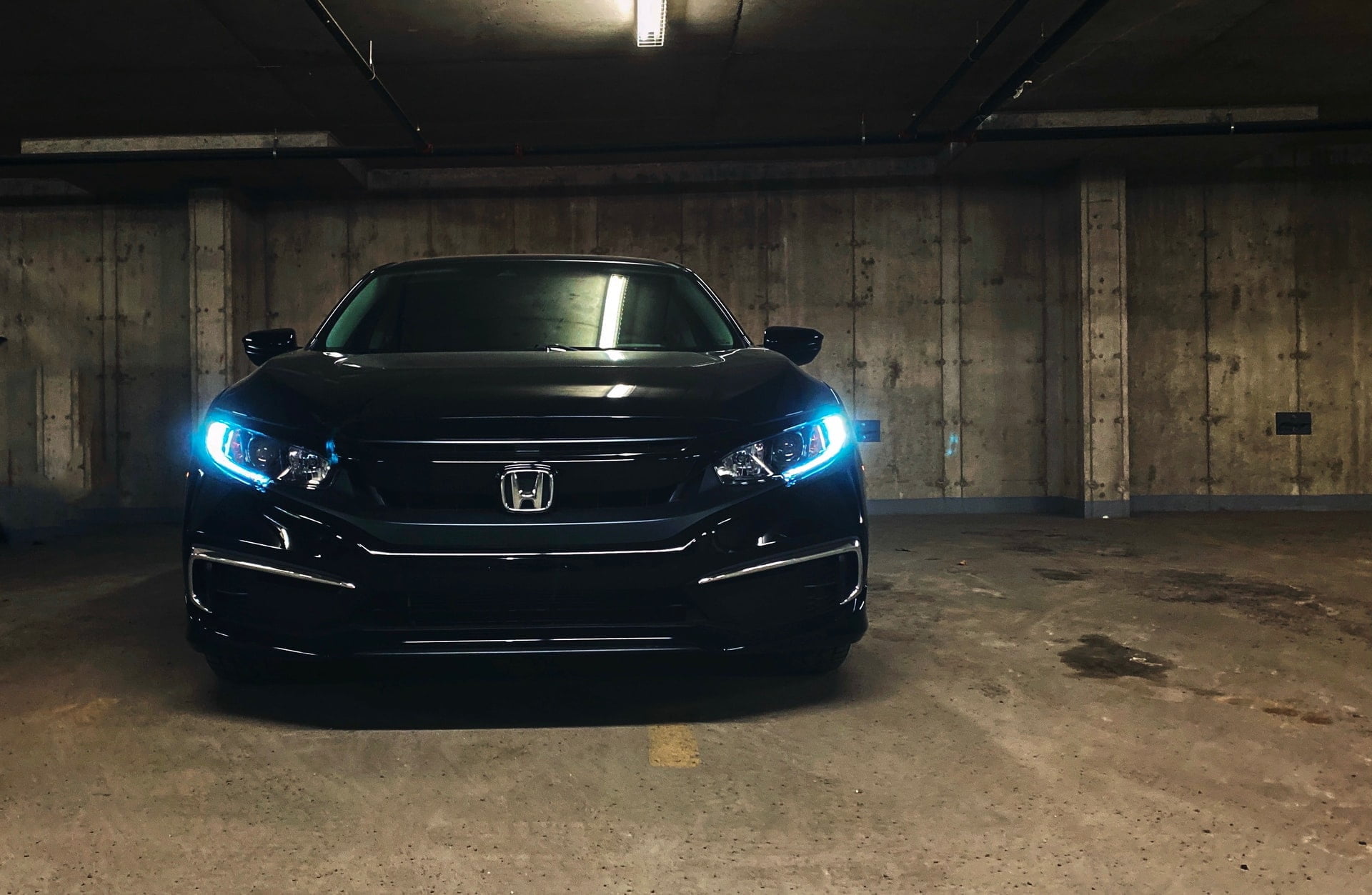
The “Magic Bullet”: ECU Tuning (Hondata & KTuner)
If you ask any enthusiast about a Honda Civic turbo lag problem fix, the first word out of their mouth will likely be “tuning.” Tools like Hondata FlashPro or KTuner are the most transformative upgrades you can buy.
- Early Spool: Tuners can adjust the electronic wastegate to close sooner, forcing the turbo to build boost at lower RPMs.
- Throttle Mapping: You can remove the “dead space” at the beginning of your pedal travel, making the car feel much more aggressive.
- CVT Optimization: Tuning can also improve how the CVT handles torque, reducing that “rubber-band” feeling that mimics turbo lag.
Note for 2026: Ensure your tuner is compatible with the latest Honda security encryption. Most major tuning brands have already bypassed the 2025+ ECU locks, but always verify before purchasing.
Why Your Modifications Might Be Making Lag Worse
A common mistake among Civic owners is adding “bolt-on” parts without a supporting tune. If you install a larger turbocharger, a cold air intake, and a front-mount intercooler without recalibrating the ECU, your turbo lag will actually increase.
As noted in recent enthusiast forums, an upgraded turbo requires more exhaust energy to move. Without a custom tune, the ECU doesn’t know how to manage the increased airflow, leading to a car that feels “dead” until it hits 4,000 RPM. Always match your hardware upgrades with the appropriate software.
![Honda Civic Acceleration Lag [How-to Fix Guide] | ISS Automotive – ISS Auto](http://issautomotive.com/cdn/shop/articles/Civic_1200x1200.jpg?v=1670409311)
Maintenance Tips to Minimize Lag
Sometimes, the best fix is simply better upkeep. To keep your turbo system healthy in 2026, follow these steps:
- Use High-Quality Synthetic Oil: Turbochargers spin at over 100,000 RPM and rely on oil for cooling and lubrication. Cheap oil breaks down under heat, creating sludge that slows the turbine.
- Spark Plug Gapping: Turbocharged engines are sensitive to spark. Ensure your plugs are gapped correctly (usually around 0.028 to 0.030 inches for the 1.5T) to prevent spark blowout under boost.
- Air Filter Replacement: A dirty air filter is like trying to breathe through a straw. Replace your filter every 15,000 miles to ensure the turbo has a steady supply of fresh air.
- Premium Fuel: While many Civics “can” run on 87 octane, using 91 or 93 octane allows the ECU to advance timing and provide more aggressive boost targets, significantly reducing perceived lag.
The Role of Electronic Throttle Controllers
If you aren’t ready to “flash” your ECU and risk your warranty, an Electronic Throttle Controller (like the HikeIt or Sprint Booster) is a popular 2026 workaround.
These devices do not increase horsepower or change the turbo’s spool time. Instead, they intercept the signal from your gas pedal and “amplify” it. By telling the car you’ve floored it when you’ve only pushed the pedal 25%, the car feels significantly faster and more responsive, effectively masking the sensation of lag.
Conclusion: Reclaiming Your Driving Experience
The Honda Civic turbo lag problem fix isn’t a one-size-fits-all solution. For the casual driver, a simple switch to premium fuel and a software update at the dealership might be enough. For the enthusiast, a combination of a KTuner/Hondata flash, a high-flow downpipe, and a dedicated intercooler will transform the Civic from a hesitant commuter into a responsive performance machine.
By 2026, the technology to tune and refine these engines has reached its peak. Don’t settle for a sluggish drive—identify whether your issue is mechanical, electronic, or maintenance-related, and take the steps to make your Civic’s acceleration as instant as it was meant to be.