
The modern vehicle is no longer just a mechanical marvel of engineering; it is a sophisticated rolling computer connected to a vast network of satellites, cellular towers, and cloud servers. In 2026, the average connected car generates gigabytes of data every hour, tracking everything from your precise GPS coordinates to your biometric stress levels and cabin conversations. While this connectivity powers advanced driver-assistance systems (ADAS) and real-time traffic updates, it also creates a massive privacy footprint.
Protecting your vehicle’s satellite data privacy has become as essential as locking your front door. With automotive manufacturers increasingly monetizing driver behavior data, understanding how to regain control of your digital cockpit is a necessity for every modern driver.
Understanding the Connected Car Data Ecosystem
To protect your data, you must first understand what exactly your car is “saying” to the world. Connected vehicles utilize satellite-based telematics to communicate with the manufacturer’s servers. This data stream often includes your vehicle identification number (VIN), exact location history, speed, braking patterns, and even information about your smartphone if it is synced via Bluetooth or CarPlay/Android Auto.
Many drivers mistakenly believe that their data is anonymous. In reality, modern data-brokerage models allow manufacturers to aggregate this information, creating a comprehensive profile of your lifestyle. In 2026, insurance companies are increasingly using this “driving behavior score” to adjust premiums in real-time, often without the driver’s explicit, granular consent.
1. Conduct a Privacy Audit of Your Infotainment System
The first step in securing your vehicle is a thorough privacy audit. Most modern infotainment systems act as a gateway to your personal data.
Review App Permissions: Open your car’s settings menu and navigate to the “App Permissions” or “Connectivity” tab. Disable location sharing for any third-party apps that do not strictly require it for functionality.
Disconnect Unnecessary Syncs: If you do not use the manufacturer’s built-in navigation or concierge services, turn off the “data sharing” toggle.
Clear Local Storage: Periodically clear your infotainment system’s cache. This removes saved destination history, paired device logs, and voice command transcripts that could be retrieved if the vehicle is sold or serviced by a third party.
2. Master the Art of “Opting Out” of Data Collection
Automakers are legally required to provide a path for users to manage their data, though they often bury these options deep within complex End-User License Agreements (EULAs).
When you purchase or lease a new vehicle in 2026, you are usually presented with a “Connected Services” agreement. It is common for drivers to click “Accept All” to get on the road faster. However, you have the right to refuse optional data collection.
Check your manufacturer’s online privacy portal. Most major brands now offer a dashboard where you can specifically opt-out of “Marketing and Third-Party Data Sharing.” By opting out, you significantly limit the amount of telemetry data sent to the cloud, effectively shielding your driving habits from insurance adjusters and data brokers.
3. Limit Smartphone Integration Risks
Your smartphone is the biggest bridge between your private life and your vehicle. When you plug your phone into a car’s USB port or sync it via Bluetooth, you are often granting the vehicle’s operating system access to your contacts, messages, and call logs.
To minimize this risk:
Restrict Access: When prompted by your phone, select “No” when the car asks for permission to sync your contacts or messages. You can still use hands-free calling without giving the car full access to your address book.
Use “Guest” Mode: If your vehicle offers a guest profile, use it for short trips. This prevents your personal account data from being permanently cached on the car’s internal storage.
Wipe Before You Sell: If you are selling or trading in your car, perform a factory reset on the infotainment system. Simply deleting your phone from the list of paired devices is not enough; a full system wipe is required to ensure your personal data is not left behind for the next owner.
4. Addressing Cybersecurity and Anti-Hacking Measures
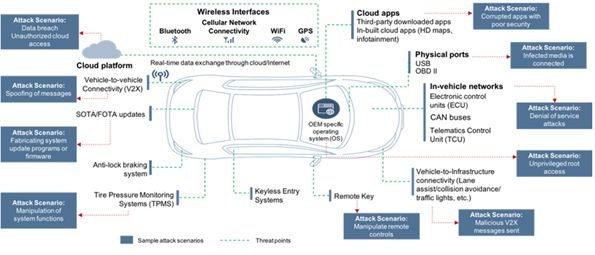
Privacy and security are two sides of the same coin. A vehicle with poor cybersecurity is vulnerable to unauthorized access to its satellite-linked features. In 2026, the rise of Over-the-Air (OTA) updates has made patching security vulnerabilities easier, but it has also introduced new attack vectors.
Keep Firmware Updated: Always install manufacturer-recommended security updates. These often contain critical patches for known vulnerabilities that could allow hackers to intercept your vehicle’s satellite communications.
Avoid Public Charging Ports: If you are driving an EV, be wary of public charging stations that offer “data syncing” or “fast charging” via USB. Stick to known, reputable charging networks to avoid “juice jacking,” where a charging cable is used to extract data from your vehicle’s computer.
Disable Wi-Fi Hotspots: If your car has a built-in Wi-Fi hotspot, disable it when not in use. An active, unsecured hotspot is a beacon for potential intruders looking to gain a foothold into your vehicle’s internal network.
5. The Role of Physical and Behavioral Privacy
Sometimes, the best protection is the most analog. In an era of constant connectivity, you can still take steps to ensure your physical presence is not tracked.
Use Offline Navigation: While satellite-connected navigation is convenient, it is also the primary source of your location data. Consider using a dedicated GPS unit that does not sync with your phone or the car’s manufacturer cloud, or use map apps in “Offline Mode” to prevent real-time tracking.
Physical Privacy Shields: If your car is equipped with internal cameras for driver monitoring or “dashcam” features that upload to the cloud, place a physical cover over the lens when the car is parked in a sensitive location.
Review Your Insurance Policy: Many insurance companies offer “telematics” programs that promise lower rates in exchange for tracking your driving. While tempting, be aware that you are trading your long-term privacy for short-term savings. Carefully read the data usage policy to see exactly what is being monitored and for how long.
6. Understanding the Legal Landscape in 2026
By 2026, regulatory bodies have begun to catch up with the automotive industry. Legislation such as the Automotive Data Privacy Act has started to enforce stricter transparency requirements.
As a consumer, you now have more rights than ever before. You have the right to request a “data dump” from your car manufacturer. By contacting their privacy department, you can ask for a copy of all the information they have collected on you. Seeing the sheer volume of data—including where you stop for coffee, how long you stay at the gym, and your average driving speed—is often the wake-up call needed to take these privacy steps seriously.
The Future of Privacy: Is True Anonymity Possible?
While the dream of total anonymity in a connected, satellite-dependent world is increasingly difficult to achieve, you can reach a “privacy-conscious equilibrium.” This involves balancing the utility of your car’s features against the exposure of your personal data.
The automotive industry is currently at a turning point. As cybersecurity threats evolve, manufacturers are being forced to prioritize “privacy by design.” However, until that becomes the industry standard, the responsibility falls on the driver. By being proactive rather than reactive, you can enjoy the comfort and safety of a connected vehicle without sacrificing your personal digital sovereignty.
Conclusion
The “connected car” experience is designed to be seamless, but that seamlessness often comes at the cost of your personal privacy. In 2026, protecting your vehicle’s satellite data is not an act of paranoia; it is a fundamental aspect of digital hygiene.
By auditing your infotainment permissions, opting out of unnecessary data sharing, managing your smartphone integration, and staying updated on cybersecurity best practices, you can successfully navigate the connected world while keeping your data locked down. Remember: your car is a tool for transportation, not a tool for corporate data harvesting. Take the wheel of your privacy today, and ensure that your driving data remains exactly where it belongs—with you.